The Impact of an Urgent Care Point-of-Care Ultrasound Program on Patient Transfers to the Emergency Department

The Impact of an Urgent Care Point-of-Care Ultrasound Program on Patient Transfers to the Emergency Department

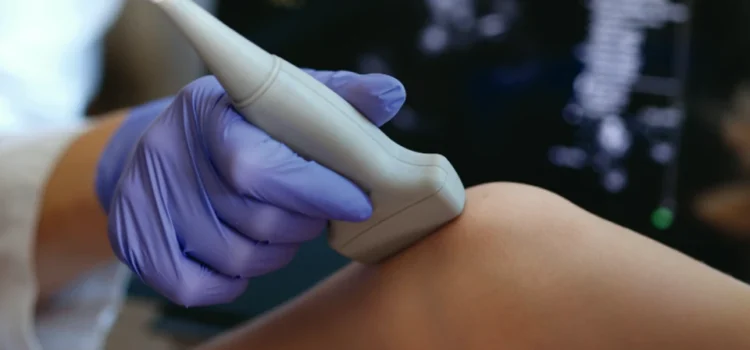
Urgent Message: Training urgent care providers to use point-of-care ultrasound resulted in fewer patient transfers to the emergency department for soft tissue/musculoskeletal and first-trimester pregnancy complaints, while also streamlining care in this single-center program. Keywords: point-of-care ultrasound; urgent care; emergency department transfer; soft tissue infection; musculoskeletal complaints; first-trimester pregnancy Lindsey E. Fish, MD, FCUCM; Genie Roosevelt, MD; Amanda G. Toney, MD Abstract Introduction: The use of point-of-care ultrasound (POCUS) is expanding into multiple clinical areas …

Read More
Calling All Clinicians to Join the Colleges

Calling All Clinicians to Join the Colleges

With great excitement—and in full disclosure—I am writing this as the newly elected President of the College of Urgent Care Medicine (CUCM) and Urgent Care College of Physicians (UCCOP). It is truly a pleasure to have been elected during the most recent Urgent Care Conference this past April in Chicago, and I look forward to leading these organizations for the next 2 years. Now I am calling all urgent care clinicians—nurse practitioners (NPs), physician assistants/associates …

Read More
Celebrating 20 Years of JUCM

Celebrating 20 Years of JUCM

“The more things change, the more they stay the same.” This quote by French writer Jean-Baptiste Alphonse Karr in 1849 is what rings true for me as I reflect on the 20-year anniversary of The Journal of Urgent Care Medicine (JUCM). Over the last 2 decades, the landscape of urgent care has changed drastically. Some highlights of those changes include significant growth in the number of urgent care centers and the number of urgent care …

Read More
Training Our Teams to Meet the Needs of Our Patients

Training Our Teams to Meet the Needs of Our Patients

Countless times over the last year I have heard variations on a “we can’t” theme. It’s a specific and focused “we can’t” related to the services we are not able to provide to our urgent care patients. “We can’t do that test.” “We can’t use that medication in clinic.” “We can’t have our medical assistants do that.” Sadly, it is purely a reflection of education and training. However, as opposed to responding with increased training …

Read More
Urgent Care Clinician Procedural Benchmarking Survey Results

Urgent Care Clinician Procedural Benchmarking Survey Results

Patrick O’Malley, MD; Albert Botchway, PhD; Laurel Stoimenoff, PT (ret.); and Lindsey E. Fish, MD, on behalf of the College of Urgent Care Medicine Over the past 15 years, there have been significant changes in urgent care (UC) medicine. First and foremost, this is a rapidly expanding field of medicine as urgent care centers now provide more than 200 million visits a year performed in more than 14,000 locations. Additionally, urgent care centers have transitioned …

Read More
Join Me and Contribute to JUCM

Join Me and Contribute to JUCM

It is an absolute honor and pleasure to serve as the new Editor In Chief of The Journal of Urgent Care Medicine (JUCM). To begin, I want to thank Joshua Russell, MD, for his incredible work with the journal over the last 5 years. His effort, dedication, and endless hard work have forever changed the direction of JUCM and shaped its future. It is my sincere hope to continue his impactful work by publishing meaningful …

Read More
Insidious Unilateral Axillary Swelling in a Patient with Untreated HIV: A Case Report

Insidious Unilateral Axillary Swelling in a Patient with Untreated HIV: A Case Report

Urgent Message: Lymphadenopathy in patients living with HIV is most commonly related to HIV infection, but it may also be related to many forms of systemic infection or malignancy. Definitive diagnosis is most often achieved by fine-needle aspiration. Hana Kusumoto, MD, MPH; Lindsey E. Fish, MD Citation: Kusumoto H, Fish LE. Insidious Unilateral Axillary Swelling in a Patient with Untreated HIV: A Case Report. J Urgent Care Med. 2025; 19(8):31-35 Key words: Diffuse Large B …

Read More
Clinical Review of Current Best Practices for Tuberculosis Screening, Testing, and Treatment in the Urgent Care Setting

Clinical Review of Current Best Practices for Tuberculosis Screening, Testing, and Treatment in the Urgent Care Setting

Urgent Message: Patients may present with needs surrounding tuberculosis (TB) screening, testing, and treatment to urgent care centers. There is considerable nuance in the approach to these scenarios with consequences for both patient and public health. Urgent care centers should develop clear guidelines for ensuring clinicians select the appropriate TB test for each patient and interpret the results accurately. Erin Loo, PA-C; Lindsey E. Fish, MD Citation: Loo E, Fish LE. Clinical Review of Current …

Read More
Return Visits and Hospitalization Rates of Adult Patients Discharged with Tachycardia After an Urgent Care Visit: A Retrospective Cohort Study

Return Visits and Hospitalization Rates of Adult Patients Discharged with Tachycardia After an Urgent Care Visit: A Retrospective Cohort Study

Urgent Message: Patients discharged from an urgent care clinic with tachycardia were found to have significantly higher odds of return visits to the urgent care and emergency department as well as higher odds of being admitted to the hospital within 7 days compared to non-tachycardic patients. Vitoria Regina Nunes Maia, MD; Ryan Loh, PhD; Michael Weinstock, MD; Lindsey E. Fish, MD Citation: Maia VRN, Loh R, Weinstock M, Fish L. Return Visits and Hospitalization Rates …

Read More
HbA1c as Screening/Diagnoses for Early or Asymptomatic Diabetes in the Urgent Care Facility

HbA1c as Screening/Diagnoses for Early or Asymptomatic Diabetes in the Urgent Care Facility

Urgent message: The use of all-inclusive kits with compact, table-top analyzers provides a rapid quantification of HbA1c levels in patients. The use of these tests for in-house screening has the potential to increase the diagnoses of early or asymptomatic diabetes in young adults and under-served or overlooked populations. Jay H. Shubrook, DO; Jane M. Caldwell, PhD; and Lindsey E. Fish, MD Citation: Shubrook JH, Caldwell JM, Fish LE. HbA1c as screening/diagnosis for early or asymptomatic …

Read More
Log In