Ramsay Hunt Syndrome—Early Recognition of Herpes Zoster Oticus in Urgent Care: A Case Report

Ramsay Hunt Syndrome—Early Recognition of Herpes Zoster Oticus in Urgent Care: A Case Report

Urgent Message: If not recognized early, herpes zoster oticus may progress to Ramsay Hunt syndrome with facial nerve paralysis. Early antiviral therapy should be initiated, ideally within 72 hours of rash onset, to optimize outcomes. Vishal Prajapati, MBBS Keywords: herpes zoster oticus; Ramsay Hunt syndrome; facial nerve palsy; varicella-zoster virus; otalgia; vesicular rash; antiviral therapy Abstract Introduction: Herpes zoster oticus results from reactivation of varicella-zoster virus within the geniculate ganglion of the facial nerve. When …

Read More


Beyond Convenience: Becoming a Healthcare Partner

Beyond Convenience: Becoming a Healthcare Partner

For much of Urgent Care’s history, convenience was our calling card. Walk-in access, extended hours, 7-day availability, and locations close to where people live and work changed what patients expected from healthcare. Convenience helped build this field, but it won’t be the only thing defining our future. Last month, I wrote about the forces reshaping healthcare: growing challenges with primary care access, rising costs, pressure on emergency departments, and employers searching for better ways to …

Read More
A Historic Milestone for Urgent Care Nurse Practitioners: The Journey to Specialty Certification Begins

A Historic Milestone for Urgent Care Nurse Practitioners: The Journey to Specialty Certification Begins

Lisa H. Bishop, DNP, MSN, MHA, FNP-BC, CDEO, FCUCM After years of persistence, collaboration, and advocacy, we have reached a historic milestone for the nurse practitioner profession and the specialty of urgent care. The American Academy of Nurse Practitioners Certification Board (AANPCB) has officially confirmed our petition to begin development of the first Urgent Care Nurse Practitioner Certification. This announcement represents far more than the creation of a new credential. It is the beginning of …

Read More
Are You Documenting For Comprehensive Care?

Are You Documenting For Comprehensive Care?

Brad Laymon, PA-C, CPC, CEMC Is there an opportunity to optimize for accurate billing when more comprehensive care is delivered? Clinicians ask me this question more often than almost any other, thinking they might be leaving money on the table. The honest answer is usually yes, but not the way most people expect. The opportunity rarely sits in doing more procedures. It sits in documentation that reflects the comprehensive care that was delivered during the …

Read More
More Kids Are Using GLP-1 Drugs For Obesity

More Kids Are Using GLP-1 Drugs For Obesity

Use of glucagon-like peptide-1 (GLP-1) receptor agonists among U.S. children with obesity is increasing rapidly. A national analysis from NYU Langone Health published in Pediatrics found that among children ages 8–11 with obesity and without diabetes, GLP-1 prescribing was 310 times higher in 2026 than it was in 2019 (when the drugs first began reaching the market), with 20,282 children in this age group receiving these medications during the study period. Most treated children had …

Read More
New-Onset Atrial Fibrillation Triggered by Diarrhea-Induced Dehydration: A Case Report

New-Onset Atrial Fibrillation Triggered by Diarrhea-Induced Dehydration: A Case Report

Urgent Message: Dehydration and its associated electrolyte disturbances can precipitate new-onset atrial fibrillation. Recognition of an irregular cardiac rhythm should prompt electrocardiographic evaluation and/or referral to a higher level of care. Morgan Cianciolo, FNP-C, Christina Gardner, DHSc, MBA, PA-C, CAQ-EM Keywords: new-onset atrial fibrillation; dehydration; volume depletion; diarrhea; electrolyte imbalance; urgent care Abstract Introduction: Atrial fibrillation is the most common sustained arrhythmia in adults and is frequently associated with precipitating factors, including systemic illness, metabolic …

Read More
Prisma Acquires 36 Novant Health Urgent Cares

Prisma Acquires 36 Novant Health Urgent Cares

Prisma Health has announced plans to acquire 36 urgent care rooftops in South Carolina from Novant Health, which until about a year ago were branded as Doctors Care clinics. After the transaction, expected to close November 1, 2026, the centers will operate under the Prisma Health Urgent Care name. Virtual and walk-in care will continue, including respiratory testing, x-rays, and laboratory services, according to the announcement. Echoing the national trend of hospital-owned urgent cares, the …

Read More
Accidental Tongue Ring Ingestion: Balancing Caution and Conservative Management in Urgent Care

Accidental Tongue Ring Ingestion: Balancing Caution and Conservative Management in Urgent Care

Urgent Message: Most ingested foreign objects pass spontaneously with little risk of complications in adults. However, in cases where patients experience persistent symptoms, escalation to emergency department evaluation may be appropriate. Naun Gutierrez Jr., MSN, FNP-C; Christina Gardner, DHSc, MBA, PA-C Keywords: foreign body ingestion; gastrointestinal foreign body; tongue ring ingestion; radiography; conservative management; urgent care Abstract Introduction: Foreign body ingestion is a clinically important presentation in urgent care, with management guided by object characteristics, …

Read More
Change of Scenery: Physicians Find Variety of Helpful Fixes For Burnout 

Change of Scenery: Physicians Find Variety of Helpful Fixes For Burnout 

A national study of physicians presented in JAMA Network Open found actions, such as changing schedules or taking a vacation, were associated with substantial improvements in burnout or professional fulfillment. Physicians completed a burnout/professional fulfillment survey, and 6 months later, completed the same survey again. The researchers identified 87 physicians out of the 359 participants whose scores happened to improve substantially during those 6 months (24.3%). Of those physicians, 30 agreed to follow-up interviews. During …

Read More
62-Year-Old With Acute Dyspnea

62-Year-Old With Acute Dyspnea

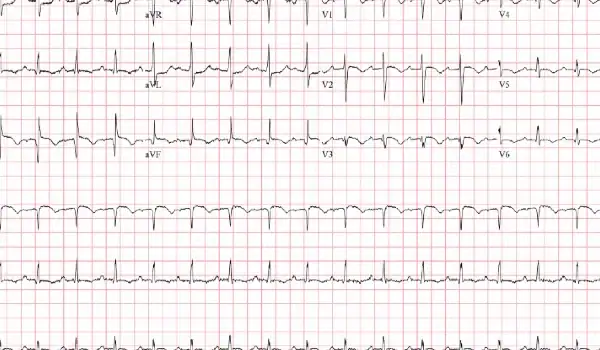
A 62-year-old female presents to urgent care with acute dyspnea that worsened significantly 2 hours prior to arrival. She has noted progressive shortness of breath over the past week but now feels severely winded. She denies chest pain, cough, fever, leg swelling, or history of deep vein thrombosis. On evaluation, the patient is tachycardic and tachypneic with a heart rate of 110 beats per minute and an oxygen saturation of 91% on room air. She …

Read More
Log In