New Vaccines Recommended for Adults and Children in 2016

New Vaccines Recommended for Adults and Children in 2016

Urgent care practices that focus on helping patients stay up to date on immunization—such as occupational medicine and travel medicine providers, or those that cater to seniors and families with children—take note: The Centers for Disease Control and Prevention has made a few changes in its recommendations this year. For adults, a recently licensed meningococcal serogroup B vaccine and human papillomavirus vaccine have been added, and the recommendation for pneumococcal vaccination has been revised from …

Read More


DIAGNOSIS CODES DETAIL

Data from the 2014 Urgent Care Chart Survey of 1,778,075 blinded visits by patients to more than 800 different urgent care clinics, conducted by the Journal of Urgent Care Medicine, reveal that for 2014, the top three diagnosis codes at U.S. urgent care centers involved, in descending order: Wounds,15.9% Sinusitis, 11.4% Respiratory conditions, other, 11.2% The bottom three diagnosis codes involved, in descending order: Influenza, 1.6% Tonsillitis, 1.5% Gynecologic issues, 1.5% The survey’s methodology and …

Read More

2016 Current Procedural Terminology Changes Pertinent to Urgent Care

Evaluation and Management There were two revisions and two additions to the “Evaluation and Management” section. Add-on codes 99354, “Prolonged evaluation and management or psychotherapy service(s) (beyond the typical service time of the primary procedure) in the office or other outpatient setting requiring direct patient contact beyond the usual service; first hour,” and 99355, “. . . each additional 30 minutes,” were revised to add the term psychotherapy in the description. Some good news in …

Read More
Chronic Cough and Shortness of Breath

Chronic Cough and Shortness of Breath

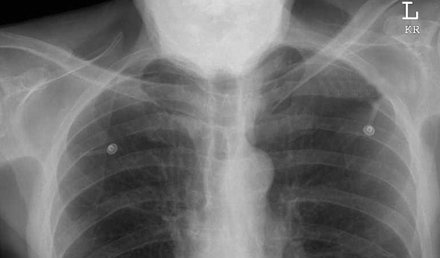
A 74-year-old man without a significant past medical history presents to an urgent care center reporting 3 days of coughing productive of green sputum, shortness of breath that worsens with exertion, and chills. He says he has a chronic morning cough but states that the sputum has changed color and that his dyspnea has increased. He says he has not had any fever, chest pain, or lower extremity pain or swelling. View the image taken …

Read More

Abstracts in Urgent Care: February, 2016

SEAN M. McNEELEY, MD Azithromycin Versus Doxycycline for Chlamydia Key point: Azithromycin is a little less effective than doxycycline for chlamydia. Citation: Geisler WM, Uniyal A, Lee JY, et al. Azithromycin versus doxycycline for urogenital Chlamydia trachomatis infection. N Engl J Med. 2015;373:2512–2521. This study of a population in a youth correctional facility compared the effectiveness of azithromycin with doxycycline in the treatment of chlamydia. A total of 567 participants were randomized to regimens of …

Read More

Complying with Medical Information Restrictions of the Family Medical Leave Act and Americans with Disabilities Act

Urgent message: Urgent care centers that are subject to the Family Medical Leave Act and the Americans with Disabilities Act are limited on the types of questions they can ask related to employee requests for leave. To avoid legal problems, managers should understand the requirements for leave and implement a process for handling information requests. Spencer Hamer, JD Two common laws that employers must deal with regarding employee leave requests are the Family Medical Leave Act (FMLA) and the Americans with Disabilities …

Read More
Shin Pain

Shin Pain

Urgent message: Lower extremity injuries are very common in adolescent athletes. Urgent care providers must remember that shin pain is not always simply shin splints. CHRISTOPHER TANGEN, DO, and RYAN SHILIAN, DO Also known as medial tibial stress syndrome, shin splints are described as the painful inflammation of the tibial periosteum, which is generally caused by repetitive physical activity.1 Repetitive injuries can cause incomplete fractures, or microfractures, of the tibia. These tibial stress reactions can predispose the bone to acute fractures. Case Presentation …

Read More
From ZoomCare to ZOOM+: What Can Urgent Care Learn?

From ZoomCare to ZOOM+: What Can Urgent Care Learn?

Urgent message: ZoomCare, which operates 28 walk-in clinics in the Pacific Northwest, has long been a technological innovator, launching web registration, scheduling, and telemedicine in its markets. In the past year, ZoomCare has evolved further to create ZOOM+, integrating urgent care with insurance, primary care, wellness, specialists, and ancillary services. As ZOOM+ redefines the future of urgent care around the needs of its community, there is much that other urgent care operators can learn in attaining revenue growth from a maturing …

Read More
Urgent Care Management of Geriatric Falls

Urgent Care Management of Geriatric Falls

Urgent message: Falls are a common reason for geriatric patients to present for medical care. In this population, even seemingly minor falls can lead to significant injury, and falls may occur in the first place because of serious underlying medical illnesses. It is critical for the urgent care provider to distinguish which of these patients can be treated in the urgent care setting and which require transfer to a higher level of care. REBEKAH BLICKENDORF, …

Read More
Log In