
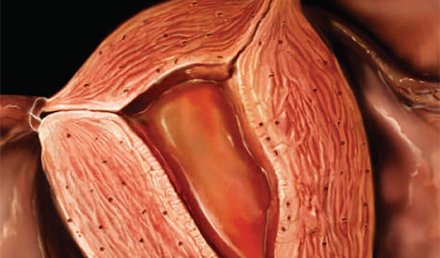
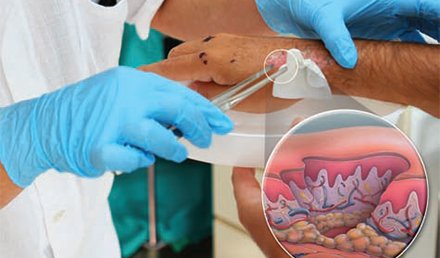
An Approach to Wound Care in the Urgent Care Setting
Urgent message: Understanding the body’s natural ability to heal itself – and factors that diminish that ability – is of great clinical value and can help you determine whether a wound is acute or chronic, and inform the decision to clean and dress or refer to a wound specialist. Michael S. Miller, DO, FACOS, FAPWCA, CWS and Eric Newgent, DO, MS Introduction The skin is the largest organ in the human body. In simplest terms, …
Read MoreUnderstanding and Embracing the Phrase ‘It Depends’
A 9-year-old Boy with Respiratory Symptoms
Urgent message: ‘Fresh eyes’ may be needed to reconsider an initial diagnosis or re-evaluate treatment in patients who present with unresolved symptoms. Joseph Toscano, MD The Case A 9-year-old boy presented to an urgent care clinic with a several-day history of dry cough and intermittently noisy and difficult breathing, especially at night. He had no fever or chest pain, no nasal discharge or headache, and no rash or pruritis. His past medical history included no …
Read MoreMarch 2010
Developing Data: March, 2010
In early 2008, UCA revamped its annual survey in conjunction with researchers at Massachusetts General Hospital and Harvard University with the goal of assuring that the UCA Benchmarking Committee’s efforts produced a scientifically valid report. Here, we present some of the data from this landmark survey. In this issue: What occupational medicine services – if any – are most commonly available in responding urgent care centers? The question regarding occupational medicine was just one segment …
Read MoreConsult Codes, Injection Codes, and Coding for Diabetes Education and In-House Dispensing
Q. My codes for consults seem to suddenly be getting denied as invalid. I checked my CPT book, and the codes are still listed as valid. What’s going on? Question submitted by multiple urgent care billers A. Yes, you are right that the consultation codes (99241-99245, 99251-99255) are still valid per CPT, as published by the AMA. CMS, however, has decided to no longer reimburse for those codes and has now changed the status indicator …
Read MoreUsing Evidence-based Care Paths
Oscar Wilde was quoted as saying, “Life imitates art far more than art imitates life.” This was never more apparent to me than a few Mondays ago when I was paraded in front of a number of primary care doctors who questioned the use of “care paths” in urgent care medicine. The leader of the mob was a gentleman who was the patriarch of a local family practice clinic. The meeting opened this way. “I …
Read MoreAbstracts in Urgent Care: March, 2010
Consequences of Increasing Copayments for Ambulatory Care Key point: Even small increases in cost-sharing were associated with fewer outpatient visits and more inpatient admissions among elders. Citation: Trivedi AN, Moloo H, Mor V. Increased ambulatory care copayments and hospitalizations among the elderly. N Engl J Med. 2010; 62: 320-328. Recently, many health plans have increased copayments for outpatient visits. Although the rationale, presumably, is to minimize unnecessary ambulatory care, the strategy could backfire if higher …
Read More
The Case of a 57-year-old Man with Heart Fluttering and Lightheadedness
What happens when our patient so badly wants to be well that they talk us out of the correct diagnosis? “I think it is my anxiety” was the mantra accepted by the physician in this case. Though diagnoses are not always clear after the initial encounter, they are not up for negotiation. Patients have a vested interest, due to denial or human nature, in believing that nothing is seriously wrong with them. It can be …
Read More