
New Data Measure Risks with Oral Corticosteroids Key point: Remember—all medications have risks! Citation: Waljee AK, Rogers MA, Lin P, et al. Short term use of oral corticosteroids and related harms among adults in the United States: population based cohort study. BMJ. 2017;357:j1415. This cohort study looks at patients with short-term steroid use (<30 days) and potential complications at 30 and 90 days out. Endpoints included fracture, sepsis, and blood clot. This study included 1.5 …
Read MoreQuality Improvement: An Urgent Care Imperative
CQI – Continuous Quality Improvement: The process by which an organization identifies a problem, plans action to address the problem, implements the plan, and reviews the results for effectiveness. In healthcare, we commit to CQI in order to affect outcomes; we focus on systems and process and how inefficiencies and lack of integration lead to undesirable outcomes. We scrutinize and identify a problem and propose a plan to change the process to improve outcomes. …
Read More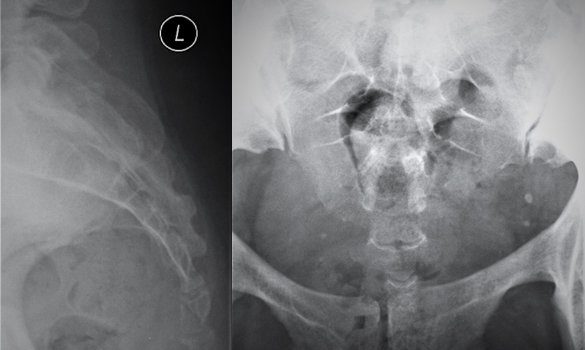
A Female with Coccyx Pain
A 48-year-old woman presents with lower sacral and coccyx pain one day after a fall in which she says she simply “missed” the edge of a chair and landed on the floor at a party. View the images taken and consider your next steps, along with possible diagnoses.
Read More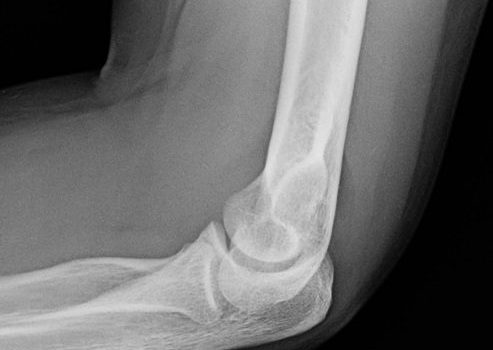
Elbow Pain and Swelling After a Fall
Case A 28-year-old woman presents to urgent care with elbow pain and swelling following a mechanical fall. She reports the pain is worse with range of motion. There is no shoulder or wrist pain, and no paresthesias. Exam confirms pain with palpation and decreased range of motion. The radial pulse is 2+; sensation distal to the elbow is grossly intact. The patient is afebrile, has a pulse of 104, respirations 20, and BP 124/80. View …
Read MoreAbstracts in Urgent Care – May 2017
Consider Vitamin D Supplementation for Patients Prone to URIs Key point: Vitamin D supplementation was both safe and protective against acute respiratory tract infection. Citation: Martineau AR, Jolliffe DA, Hooper RL, et al. Vitamin D supplementation to prevent acute respiratory tract infections: systematic review and meta-analysis of individual participant data. BMJ. 2017;356:i6583. An ounce of prevention would definitely be a good idea when it comes to upper respiratory infection. With the currently limited treatments for …
Read MoreAn 18 Month-Old-Boy with Vomiting
In Bouncebacks, we provide the documentation of an actual patient encounter, discuss patient safety and risk-management principles, and then reveal the patient’s bounceback diagnosis. This case is from the book Bouncebacks!, available at www.anadem.com and www.amazon.com. History of Present Illness John is a healthy 18-month-old boy. One morning shortly after Christmas, he awoke with cough and congestion. After breakfast, he had an episode of vomiting. Though his symptoms remained mild over the next 3 days, …
Read More
A Multimodal Intervention to Reduce Antibiotic Use for Common Upper Respiratory Infections in the Urgent Care Setting
Urgent message: Upper respiratory infections (URIs) are the most common presenting complaint in urgent care. Regardless of etiology or provider specialty, antibiotics are prescribed 60% of the time for the treatment of URIs, contributing to drug-resistant respiratory organisms. Employing a multimodal intervention, the authors we were able to appreciate a modest, statistically significant decrease in the rate of antibiotic prescribing among urgent care providers. Introduction Antimicrobial resistance is arguably one of the greatest risks to …
Read MorePatient Satisfaction: The Redirection Game
In my previous column, I discussed the challenging issue of patient satisfaction and the provider behaviors that can contribute to poor service experiences. In this month’s editorial, I will pivot the discussion to the patient profiles and behaviors that can trigger negative interactions and poor service reviews. While most of us understand the importance of “customer service” in healthcare, we do not always dedicate ourselves to understanding the common traps and landmines that lead to …
Read More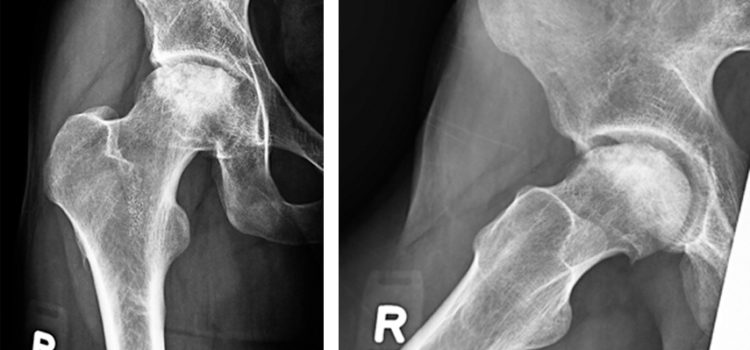
Suddenly Urgent Chronic Hip Pain
A 47-year-old male presents to your urgent care center with an exacerbation of chronic hip pain. The patient offers little by way of explanation; he reports he’s felt discomfort in his right hip “for years,” but that it’s grown worse recently. View the images taken and consider your next steps, along with possible diagnoses.
Read More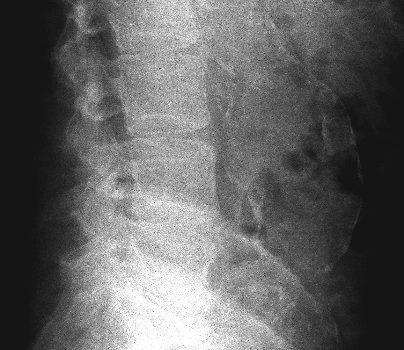
Dull, Constant Back Pain After a Fall: Abdominal Aortic Aneurysm (AAA)
Case A 67-year-old male presents with acute mid-low back pain following a fall. He describes the pain as “dull and constant.” When asked if the pain is worse with range of motion, he replies, “I think so.” Physical exam reveals he is afebrile, has a pulse of 102, respirations 20, and blood pressure 122/78. His abdomen is soft and nontender without rigidity, rebound, or guarding; there is no bruising or distention. His back appears normal, …
Read More