
Published on
Citation:
https://www.jucm.com/documents/2026/03/clinical-image-challenges-april-2026.pdf/
Differential Diagnosis
- Angioedema
- Streptococcal cellulitis
- Staphylococcal cellulitis
- Arthropod bite or sting
- Erysipeloid
- Orf disease (contagious ecthyma)
Diagnosis
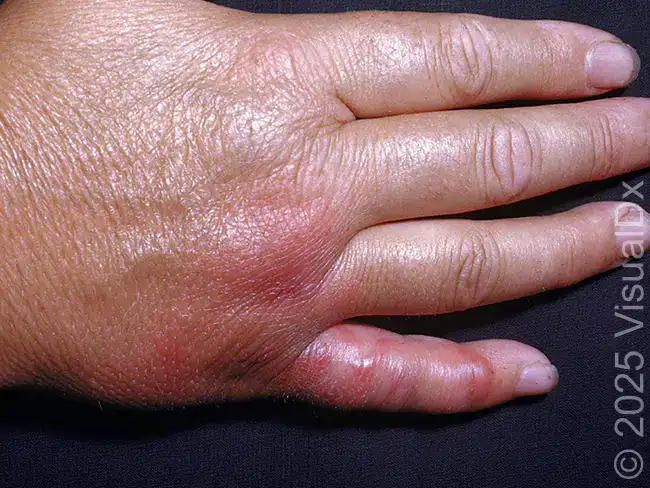
The correct diagnosis is erysipeloid, a skin infection caused by gram-positive bacillus Erysipelothrix rhusiopathiae that is transmitted when an open wound is in contact with an infected animal or animal meat. Slaughterhouse workers, butchers, fishermen, farmers, and veterinarians are at risk for infection with E. rhusiopathiae. It may also occur from a dog or cat bite. The clinical spectrum of human infection includes 3 major forms of disease:
- Localized cutaneous infection is most common – characterized by subacute erysipeloid cellulitis at the site of exposure, typically affecting the fingers or hands. Systemic symptoms are uncommon.
- Diffuse cutaneous infection – lesions progress to more widespread involvement and may be urticarial or bullous. Patients frequently have fever and arthralgia. Eating contaminated meat or seafood has also been associated with diffuse cutaneous disease.
- Systemic infection – bacteremia, relatively uncommon. Most patients have fever and concurrent diffuse erysipeloid skin lesions to the trunk and extremities, and may develop endocarditis.
What To Look For
- History of exposure: Symptoms typically develop 2 – 7 days following inoculation and are described as throbbing, itching, burning or tingling.
- Skin lesions: Begin as a small red macule and progress slowly to a well-developed violaceous lesion with central clearing and a raised border. Edema is minimal; stiffness and pain of the site is typical.
- Check for lymphadenopathy: local lymphangitis and adenitis occur in 30% of cases.
Pearls for Urgent Care Management
- May be self-limited: Localized Erysepeloid skin lesions may resolve in the absence of specific therapy with spontaneous resolution typically occurring within three weeks
- Antibiotic treatment: Typically shortens clinical illness and risk of relapse; Penicillin V potassium (500 mg every 6 hours) or amoxicillin (500 mg every 8 hours) should be prescribed. Seven days of therapy is usually curative.
- Home care: Local heat application may be helpful for patients with arthritis and painful lesions.
- Emergency referral: Consider referral to emergency department if evidence of diffuse cutaneous disease or systemic infection as parenteral antibiotics are indicated in those cases
53-Year-Old Butcher With Red Rash Following a Cut to the Hand
1 2