
83-Year-Old Female With Palpitations

83-Year-Old Female With Palpitations

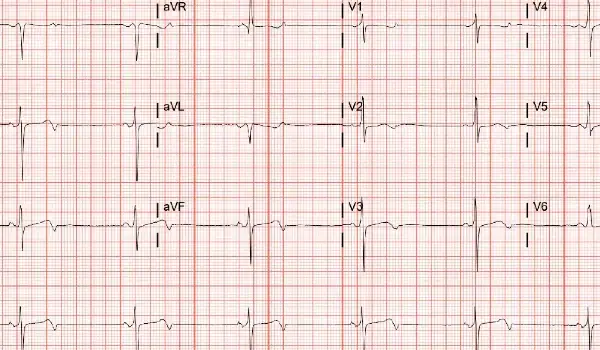
An 83-year-old female with a past medical history of hypertension, diabetes mellitus, and hyperlipidemia presents to urgent care with palpitations and dizziness for the past 2 weeks. She does not have any family members present. An ECG is obtained. View the ECG and consider what your diagnosis and next steps would be. Resolution of the case is described on the next page.

Read More

Urgent Care Beats Primary Care On Speed of Service

Urgent Care Beats Primary Care On Speed of Service

A survey of 1,014 U.S. healthcare consumers suggests that speed remains urgent care’s strongest competitive advantage, and it’s also the factor consumers value most, according to data from branding firm Monigle. Urgent care outperformed primary care on consumers’ perception of “help you get care quickly” (71% vs 68%), but primary care scored better on all the other measures included in the survey. The largest gaps between urgent care and primary care appeared in the ability …

Read More
Pediatric Vaccine Hesitancy in Families Seeking Care in Urgent Care Centers

Pediatric Vaccine Hesitancy in Families Seeking Care in Urgent Care Centers

Urgent Message: Despite national recommendations regarding childhood vaccination, some parents are hesitant or refuse to vaccinate their child. This survey assessment presents parents’ perceptions of vaccination and the scope of undervaccination in a pediatric urgent care population. Stacy B. Buchanan, DNP, APRN, CPNP-PC; Brooke Cherven, PhD, MPH, RN; Betsy Dye, MS, CPNP-PC, NPD-BC, EBP-C; Temima Oratz, BSN, RN, EBP-C; Margaret Gettis, DNP, APRN, CPNP-PC, EBP-C Keywords: vaccine hesitancy; childhood immunization; undervaccination; measles-mumps-rubella vaccine; varicella vaccine; …

Read More
Clinicians Rewrite Vast Majority of AI-Drafted Portal Messages

Clinicians Rewrite Vast Majority of AI-Drafted Portal Messages

Researchers from Dartmouth found that when using large language models (LLMs) to draft responses to patient portal messages, clinicians may spend more time editing the AI responses than it would take to write them manually in the first place. Using more than 610,000 patient portal messages, the researchers created a training dataset of 144,000 clinician–patient conversations and tested multiple commercial and locally hosted LLMs against expert-written responses. In the study —which was presented at the …

Read More
We Must Meet Our Patients Where They Are

We Must Meet Our Patients Where They Are

Lindsey E. Fish, MD, FCUCM, Editor-in-Chief, The Journal of Urgent Care Medicine, [email protected] In this issue of JUCM, you will find an original research article exploring parental vaccine hesitancy. Vaccine hesitancy is a challenging issue because it frequently triggers charged emotions in patients and clinicians alike. While there have always been strong opinions regarding vaccines, from the clinician perspective, the degree amplified significantly during the COVID-19 pandemic. I will never forget reading about front-line physicians …

Read More
Opportunity Is Knocking. We Need to Answer.

Opportunity Is Knocking. We Need to Answer.

Over the past year, I’ve written about telling our story, strengthening our voice, proving our value, and, most recently, Urgent Care’s evolution from a convenient alternative to an essential part of everyday healthcare. As I look at where we stand today, I believe we’re entering another important chapter. Healthcare is changing rapidly, and nearly every trend points in the same direction. Primary care physicians are retiring faster than they can be replaced. New physicians aren’t …

Read More
Back Pain May Improve With Lumbar Belt Use

Back Pain May Improve With Lumbar Belt Use

Lumbar belts appear to be helpful for alleviating low back pain, possibly offering a reasonable alternative to pain medication. In an analysis published in JAMA Network Open of 168 adults with nonspecific low back pain lasting 1–6 months, researchers evaluated whether adding a nonrigid lumbar belt to usual care improved pain and function. Patients assigned to the belt were instructed to wear it 4–8 hours daily for 12 weeks. At 12 weeks, disability scores improved …

Read More
Is It Okay For Patients To Sneak a Peek In The Portal?

Is It Okay For Patients To Sneak a Peek In The Portal?

Waiting for test results can be a nerve-wracking experience for patients, and many are accessing results in a portal before their clinician even gets a look. In a nationally representative survey of 4,982 U.S. adults, 68.6% of respondents said they viewed their test results through a patient portal before hearing from their healthcare practitioner. Among those who viewed results first, 6.6% reported poor understanding of what the results showed and what they meant for their …

Read More
Urgent Care Antibiotic Stewardship Produces Positive Results

Urgent Care Antibiotic Stewardship Produces Positive Results

Antimicrobial stewardship programs (ASPs) in urgent care settings appear to produce practice improvement, according to a new systematic review published in Cureus. Researchers evaluated literature reporting on ASPs specifically in urgent care settings and found that 11 of 12 completed studies demonstrated reduced antimicrobial prescribing or improved appropriateness in prescribing patterns among clinicians. Education and guideline-based strategies produced some of the largest improvements. For example, an intervention that used clinical pathway pocket-card algorithms to guide …

Read More
Clinicians Don’t Always Agree On Physical Exam Findings

Clinicians Don’t Always Agree On Physical Exam Findings

A prospective multicenter study that compared physical examination findings in children with community-acquired pneumonia (CAP) found that 2 clinicians examining the same patient may not always agree on whether certain physical findings are or are not present during an exam. The study, published in JAMA Network Open, included 252 patients aged 3 months–17 years with CAP evaluated at 7 pediatric emergency departments. Two clinicians independently examined each patient within 60 minutes. After the exam findings …

Read More
Log In