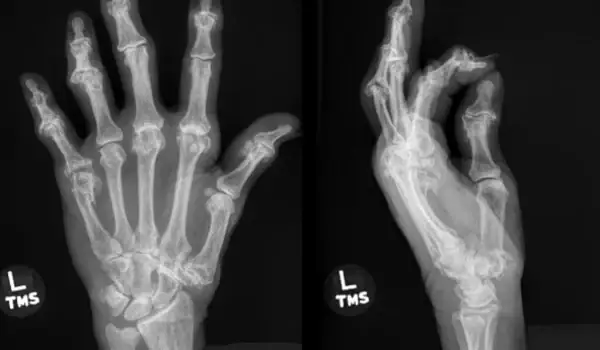
68-Year-Old Female With Swollen, Painful Hand

68-Year-Old Female With Swollen, Painful Hand

A 68-year-old woman presents to urgent care with her husband after tripping on a rug at home the previous day and falling onto her left hand. She has experienced persistent pain and swelling in the hand since the fall. Ibuprofen provided modest pain relief. Physical examination reveals normal vital signs with focal edema and tenderness over the dorsal surface of the 4th and 5th metacarpals. Decreased range of motion and knuckle contour at the 5th …

Read More

52-Year-Old Female With Extremely Itchy Dark-Ringed Bumps on Skin of Back

52-Year-Old Female With Extremely Itchy Dark-Ringed Bumps on Skin of Back

A 52-year-old woman visits the urgent care clinic for itchy bumps that have been present on her back for the past 3 months. The lesions are very itchy, and it is difficult for the patient to stop scratching.  She has not tried any treatments for her symptoms since onset. On dermatological examination, pink scaly papules with dark exterior rims are seen on her back, some of which appear excoriated. Laboratory results for complete blood count, …

Read More
Abstracts in Urgent Care – October 2026

Abstracts in Urgent Care – October 2026

Guideline for Recurrent Urinary Tract Infections in Women Take Home Point: This guideline recommends that urinalysis with symptoms should be used to diagnose recurrent urinary tract infection (rUTI) and emphasizes culture-guided antibiotic therapy, supportive care, and preventative measures to reduce antimicrobial resistance and overtreatment. Citation: Ackerman A, Bradley M, D’Anci K, et al. Updates to recurrent uncomplicated urinary tract infections in women: AUA/CUA/SUFU guideline (2025). J Urol. 2026;215(1):3–12. Relevance: Understanding of female rUTI has evolved …

Read More
Addressing Congenital Syphilis With Point-of-Care Testing in Urgent Care

Addressing Congenital Syphilis With Point-of-Care Testing in Urgent Care

Urgent Message: Urgent care centers can help prevent congenital syphilis by screening pregnant patients lacking prenatal records, confirming reactive point-of-care results, and administering penicillin when follow-up is uncertain. Amir Reza Tehrani, BS; Glenn E. Harnett, MD; Jeffrey D. Klausner, MD, MPH Keywords: syphilis screening; congenital syphilis; point-of-care testing; sexually transmitted infections; pregnant patients; urgent care; rapid diagnostics Abstract Purpose: The purpose of this review is to use clinical, operational, and economic evidence to support integrating …

Read More
Ramsay Hunt Syndrome—Early Recognition of Herpes Zoster Oticus in Urgent Care: A Case Report

Ramsay Hunt Syndrome—Early Recognition of Herpes Zoster Oticus in Urgent Care: A Case Report

Urgent Message: If not recognized early, herpes zoster oticus may progress to Ramsay Hunt syndrome with facial nerve paralysis. Early antiviral therapy should be initiated, ideally within 72 hours of rash onset, to optimize outcomes. Vishal Prajapati, MBBS Keywords: herpes zoster oticus; Ramsay Hunt syndrome; facial nerve palsy; varicella-zoster virus; otalgia; vesicular rash; antiviral therapy Abstract Introduction: Herpes zoster oticus results from reactivation of varicella-zoster virus within the geniculate ganglion of the facial nerve. When …

Read More
New-Onset Atrial Fibrillation Triggered by Diarrhea-Induced Dehydration: A Case Report

New-Onset Atrial Fibrillation Triggered by Diarrhea-Induced Dehydration: A Case Report

Urgent Message: Dehydration and its associated electrolyte disturbances can precipitate new-onset atrial fibrillation. Recognition of an irregular cardiac rhythm should prompt electrocardiographic evaluation and/or referral to a higher level of care. Morgan Cianciolo, FNP-C, Christina Gardner, DHSc, MBA, PA-C, CAQ-EM Keywords: new-onset atrial fibrillation; dehydration; volume depletion; diarrhea; electrolyte imbalance; urgent care Abstract Introduction: Atrial fibrillation is the most common sustained arrhythmia in adults and is frequently associated with precipitating factors, including systemic illness, metabolic …

Read More
Accidental Tongue Ring Ingestion: Balancing Caution and Conservative Management in Urgent Care

Accidental Tongue Ring Ingestion: Balancing Caution and Conservative Management in Urgent Care

Urgent Message: Most ingested foreign objects pass spontaneously with little risk of complications in adults. However, in cases where patients experience persistent symptoms, escalation to emergency department evaluation may be appropriate. Naun Gutierrez Jr., MSN, FNP-C; Christina Gardner, DHSc, MBA, PA-C Keywords: foreign body ingestion; gastrointestinal foreign body; tongue ring ingestion; radiography; conservative management; urgent care Abstract Introduction: Foreign body ingestion is a clinically important presentation in urgent care, with management guided by object characteristics, …

Read More
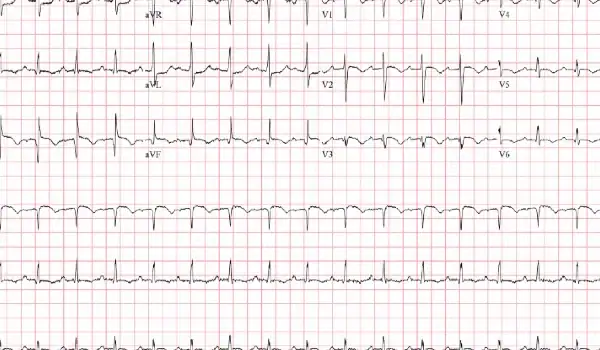
62-Year-Old With Acute Dyspnea

62-Year-Old With Acute Dyspnea

A 62-year-old female presents to urgent care with acute dyspnea that worsened significantly 2 hours prior to arrival. She has noted progressive shortness of breath over the past week but now feels severely winded. She denies chest pain, cough, fever, leg swelling, or history of deep vein thrombosis. On evaluation, the patient is tachycardic and tachypneic with a heart rate of 110 beats per minute and an oxygen saturation of 91% on room air. She …

Read More
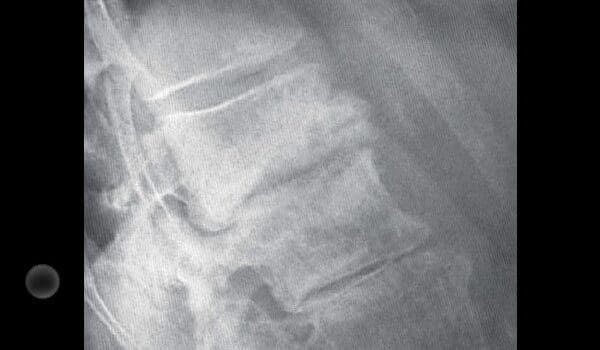
79-Year-Old Female With Acute Back Pain

79-Year-Old Female With Acute Back Pain

A 79-year-old female presents to urgent care complaining of sharp, severe lower back pain for the past 2 months. The pain began when she was bending over to pick something up from the floor and has not improved. The pain occasionally radiates to her flank area but not down her legs, and she denies any bowel or bladder pattern changes. She tried acetaminophen, cold and warm compresses, and rest without any relief. The pain worsens …

Read More
Urgent Care Diagnosis and Management of Toddler’s Fracture

Urgent Care Diagnosis and Management of Toddler’s Fracture

Urgent Message: Identifying fall height and mechanism, while also relying on caregiver narratives, can help urgent care clinicians rule out severe pathologies and diagnose a toddler’s fracture in ambulatory pediatric patients after a fall. Connor Osmond, BA; Thomas Seebacher, DO Keywords: fractures, bone; tibial fractures; gait disorders, neurologic; radiography; accidental falls Editor’s Note: While the images presented here are authentic, the patient case scenario is hypothetical. Questions for the Clinician at the Bedside Abstract A …

Read More
Log In