The Structural Divide in Urgent Care Occupational Medicine

The Structural Divide in Urgent Care Occupational Medicine

Data reveals that occupational medicine in urgent care is fundamentally top-heavy. As the table illustrates, the top 20% of clinics drive 29% of their total occupational medicine visit volume through employer-paid services (EPS) and workers’ compensation (WC) -paid services, averaging 12 daily visits. Conversely, the bottom 20% average less than 1 visit per day from these 2 payer types. Private-insurer or patient-paid services account for the balance of the visits overall. This stark disparity is …

Read More
Who Can Take X-Rays in an Urgent Care Center: A 50-State Framework

Who Can Take X-Rays in an Urgent Care Center: A 50-State Framework

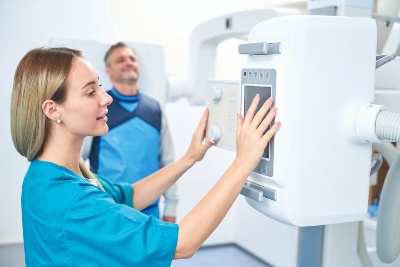
Urgent Message: This 50-state framework details who can legally operate x-ray equipment, as these laws dictate whether the industry’s predominant advanced practice provider-staffing model remains operationally and financially viable. Alan A. Ayers, MBA, MAcc Keywords: urgent care; radiography; radiologic technologists; licensure; nurse practitioners; physician assistants According to the Urgent Care Association (UCA), on-site plain-film radiography is a defining feature of urgent care and is among the criteria for UCA Certification.¹ Yet across the 50 states …

Read More
The 2026 Urgent Care Top 100 By Number of Locations

The 2026 Urgent Care Top 100 By Number of Locations

Alan Ayers, MBA, MAcc Keywords: urgent care; ambulatory care facilities; joint venture; organizational affiliation The nation’s total urgent care center count reached 14,655 as of April 1, 2026, based on data provided by National Urgent Care Realty and Urgent Care Consultants. Of these, 6,056 locations (41.3%) are operated by a Top 100 entity. Hospital affiliations within the Top 100 remain the dominant model, with 55.9% of Top 100 locations participating in a health system relationship. …

Read More
How Off-Duty Statements Create On-Duty Liability

How Off-Duty Statements Create On-Duty Liability

Urgent Message: There is effectively no right to “free speech” in a private employer-employee relationship. That means private healthcare employers have the authority to terminate staff whose off-duty statements violate professional ethics or harm the organization’s reputation. Alan A. Ayers, MBA, MAcc Keywords: free speech; social media; healthcare liability; malpractice risk; first amendment; employment law; ethical standards; risk management In today’s polarized political climate, the line between private citizen and public professional hasn’t vanished, but …

Read More
Which Generation Uses Urgent Care The Most?

Which Generation Uses Urgent Care The Most?

Understanding generational demographics is critical for any organization because age drives consumer behavior.¹ While the U.S. population is distributed relatively evenly across adult cohorts,² urgent care utilization—based on an analysis of 2025 Experity EMR visit data conducted by Urgent Care Consultants—skews heavily toward younger adults.³ Gen Z and Millennials combined (born 1981–2012) account for more than 51% of all urgent care visits despite representing only 43% of the U.S. population—a combined over-index of nearly 20 …

Read More
Amplify the Practice: Highlights from the 2026 UCA Convention

Amplify the Practice: Highlights from the 2026 UCA Convention

By Alan A. Ayers, MBA, MAcc — President of Urgent Care Consultants; Senior Editor of The Journal of Urgent Care Medicine The 2026 Urgent Care Association Convention convened in Chicago this April under the theme “Amplify” — and across roughly fifty clinical and practice management sessions, that word kept landing on the same point: amplify the clinician, don’t replace them. Artificial intelligence, the tonal undercurrent of nearly every track, was framed less as an autonomous …

Read More
Portable X-Ray in Urgent Care: Why Cheaper Isn’t Better

Portable X-Ray in Urgent Care: Why Cheaper Isn’t Better

Urgent Message: Urgent care startups should avoid “cheaper” portable x-ray units, as they face regulatory restrictions, create workflow bottlenecks, and produce inferior images, making a fixed DR suite a better long-term investment. Keywords: portable x-ray; diagnostic radiology; radiation exposure; fractures Urgent care centers thrive by delivering fast, comprehensive, 1-stop service to ambulatory patients, and imaging capability is central to that promise. New operators commonly face a dilemma: their pro forma is tight, build-out costs are …

Read More
The ‘Test and Treat’ Shift: 2026

The ‘Test and Treat’ Shift: 2026

“Test and treat” legislation at the state level is transforming pharmacists from dispensers into providers, authorizing them to diagnose and prescribe for conditions like flu, strep, and COVID-19 without physician oversight. As the map illustrates, this model is now active in more than 20 “direct open market” states (green), with legislation pending in key “battleground” states (yellow). JUCM first reported this disruption in 2015, and now the strategic intent is finally meeting regulatory reality.1 As …

Read More
The ‘Halo Effect’ of Hybrid Care

The ‘Halo Effect’ of Hybrid Care

Contrary to the fear that virtual care cannibalizes brick-and-mortar volume, 2025 data reveals a distinct “halo effect” for hybrid urgent care operators. Analysis of average daily visits shows that practices offering telemedicine outperformed those that did not by nearly 12%, averaging 34.5 visits per day compared to 30.8. Crucially, this growth is not purely digital. While hybrid clinics averaged 2.1 telemedicine cases daily, they also saw 32.4 in-person visits—approximately 2 more physical encounters per day …

Read More
How to Choose the Right Level of Surveillance and Security for an Urgent Care Center

How to Choose the Right Level of Surveillance and Security for an Urgent Care Center

Urgent Message: Choosing the right security system—whether it’s surveillance cameras or a scalable monitored alarm network—can improve operational oversight and reduce the financial risk of your urgent care investment. Alan A. Ayers, MBA, MAcc Keywords: urgent care security; surveillance cameras; HIPAA compliance; monitored alarm systems; healthcare facility safety; operational risk management Whether you’re just starting in urgent care or managing a growing footprint of centers, securing your physical space is essential to protecting your investment. …

Read More
Log In