
Portable X-Ray in Urgent Care: Why Cheaper Isn’t Better

Portable X-Ray in Urgent Care: Why Cheaper Isn’t Better

Urgent Message: Urgent care startups should avoid “cheaper” portable x-ray units, as they face regulatory restrictions, create workflow bottlenecks, and produce inferior images, making a fixed DR suite a better long-term investment. Keywords: portable x-ray; diagnostic radiology; radiation exposure; fractures Urgent care centers thrive by delivering fast, comprehensive, 1-stop service to ambulatory patients, and imaging capability is central to that promise. New operators commonly face a dilemma: their pro forma is tight, build-out costs are …

Read More

The ‘Test and Treat’ Shift: 2026

The ‘Test and Treat’ Shift: 2026

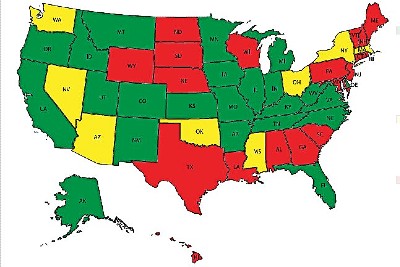
“Test and treat” legislation at the state level is transforming pharmacists from dispensers into providers, authorizing them to diagnose and prescribe for conditions like flu, strep, and COVID-19 without physician oversight. As the map illustrates, this model is now active in more than 20 “direct open market” states (green), with legislation pending in key “battleground” states (yellow). JUCM first reported this disruption in 2015, and now the strategic intent is finally meeting regulatory reality.1 As …

Read More
The ‘Halo Effect’ of Hybrid Care

The ‘Halo Effect’ of Hybrid Care

Contrary to the fear that virtual care cannibalizes brick-and-mortar volume, 2025 data reveals a distinct “halo effect” for hybrid urgent care operators. Analysis of average daily visits shows that practices offering telemedicine outperformed those that did not by nearly 12%, averaging 34.5 visits per day compared to 30.8. Crucially, this growth is not purely digital. While hybrid clinics averaged 2.1 telemedicine cases daily, they also saw 32.4 in-person visits—approximately 2 more physical encounters per day …

Read More
How to Choose the Right Level of Surveillance and Security for an Urgent Care Center

How to Choose the Right Level of Surveillance and Security for an Urgent Care Center

Urgent Message: Choosing the right security system—whether it’s surveillance cameras or a scalable monitored alarm network—can improve operational oversight and reduce the financial risk of your urgent care investment. Alan A. Ayers, MBA, MAcc Keywords: urgent care security; surveillance cameras; HIPAA compliance; monitored alarm systems; healthcare facility safety; operational risk management Whether you’re just starting in urgent care or managing a growing footprint of centers, securing your physical space is essential to protecting your investment. …

Read More
Stop Waiting For ‘AI-Native’ Clinicians, Invest in Upskilling Now

Stop Waiting For ‘AI-Native’ Clinicians, Invest in Upskilling Now

Urgent Message: Invest in artificial intelligence upskilling across your organization by dedicating resource time and funding for educational activities. It’s a critical strategy for urgent care operators to improve staff retention and operational readiness. Keywords: clinician upskilling; AI literacy; workflow adoption; clinical documentation; decision support; change management Burnout remains a serious consideration across healthcare, and urgent care is no exception. At the same time, artificial intelligence (AI) is reshaping how we deliver and manage care. …

Read More
The Listening Revolution: Change Management Considerations with Ambient AI

The Listening Revolution: Change Management Considerations with Ambient AI

Urgent Message: The ultimate goal of ambient AI is to reclaim time for patient care by offloading burdensome administrative processes. Building trust is the first of several success factors in this revolution. Keywords: ambient AI; medical scribe; clinical documentation; EHR workflow; implementation barriers; change management Alan A. Ayers, MBA, MAcc Urgent care providers face immense demands: high patient volumes, tight schedules, and the ongoing expectation to deliver exceptional care. Yet amid these pressures, documentation continues …

Read More
Missed Opportunities in STI Test Bundling

Missed Opportunities in STI Test Bundling

An analysis of 70,915,524 visits logged across ~3,600 urgent care centers in the Experity EMR from January 1, 2024, through November 22, 2025, reveals a critical disconnect between testing realities and Centers for Disease Control and Prevention guidelines advising concurrent screening for HIV and syphilis when testing for chlamydia and gonorrhea (CT/NG). The most glaring omission is syphilis. As the table illustrates, fewer than 45% of patients tested for CT/NG who used health insurance—which paid …

Read More
The Intelligent Evolution: Lessons from the 2026 Urgent Care Congress

The Intelligent Evolution: Lessons from the 2026 Urgent Care Congress

Urgent Message: The urgent care industry is pivoting from a phase of rapid footprint expansion to one of sustainable sophistication, driven by the integration of AI, the diversification of high-value services (like behavioral health), and a rigorous focus on operational and financial resilience to meet modern consumer expectations. Alan A. Ayers, MBA, MAcc is President of Urgent Care Consultants and is Senior Editor of The Journal of Urgent Care Medicine For the past decade, the …

Read More
Is Your Urgent Care Ready for the 2026 ADA Mandate?

Is Your Urgent Care Ready for the 2026 ADA Mandate?

Urgent Message: Urgent care facilities must ensure their medical diagnostic equipment and staff training protocols meet new ADA accessibility standards by the July 8, 2026, deadline. Key Words: Americans with Disabilities Act; Medical Diagnostic Equipment; Accessible Exam Tables; Staff Training; Urgent Care Compliance Alan A. Ayers, MBA, MAcc Ensuring equal access to healthcare services isn’t just a goal, it’s a legal mandate. The Americans with Disabilities Act (ADA)1 assures everyone has equal access to healthcare …

Read More
Commercial Reimbursement In Urgent Care

Commercial Reimbursement In Urgent Care

While examining 17,410,492 commercially insured visits in the Experity EMR from November 1, 2024, through October 31, 2025, we calculated zero-balance net revenue per visit (NRV) for urgent care by state. NRV represents total payments from both patients and insurers when the claim is closed, and it includes evaluation/management and ancillary codes. Data include commercial plans and third‑party managed Medicaid and Medicare but exclude self-pay, workers’ compensation, employer-paid services, motor vehicle accidents, and traditional Medicare …

Read More
Log In