
A productive occupational medicine sales effort is predicated on your ability to identify a prospect’s need and then to match that need with your services. Both require knowing when and how to ask the right questions. Why is Questioning So Important? Invariably, you begin your association with a prospect as“just another salesperson.” You must set yourself apart from the start. Breaking the ice to pique interest is one area in which well-constructed questions can secure …
Read MoreHiring an Employee
JOHN SHUFELDT, MD, JD, MBA, FACEP Let’s be honest, we have all done it: hired someone who, in retrospect, had only two brain cells, both of which turned out to be mutually inhibitory. Have I told you about the time (many years ago) when I hired a provider who, on a busy day, locked himself in the bathroom and screamed, “If you don’t get me some more help, I am going to start drinking?” Since …
Read More
Supraventricular Tachycardia in a Child with Williams Syndrome after Nebulized Albuterol
Urgent message: Clinicians must be prepared for the possibility of supraventricular tachycardia after administration of nebulized albuterol in patients of any age, especially in the presence of heart disease. Muhammad Waseem, MD, Padma Gadde, MD, and Gerard Devas, MD Asthma is the most common lung disease in children. Five percent of children in the United States have asthma, and status asthmaticus—the leading cause of admission due to asthma exacerbation—accounts for approximately 10% of visits to …
Read More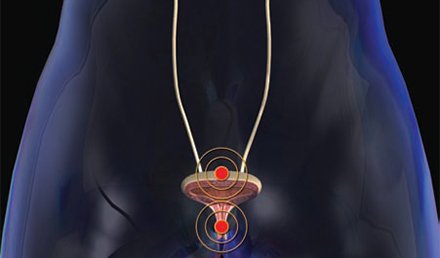
Evaluation, Identification, and Treatment of Urinary Tract Infections
Urgent message: Urinary tract infections are a common cause of abdominal pain and a common presenting complaint in urgent care. Proper diagnosis, treatment, and patient education on preventive measures are key to optimal outcomes. William Gluckman, DO, MBA, FACEP, Karen Keaney Gluckman, MSN, APN, C, CWCN, CCCN The global term urinary tract infection (UTI) incorporates cystitis and infection involving the bladder (a lower tract source), as well as pyelonephritis, an infection involving the kidneys (an …
Read MoreWhat About Retail Health?
There is plenty of posturing going on within organized medicine with regard to the “retail health” revolution. Concerns have been raised regarding continuity of care, the “corporatization” of medicine, kickbacks to pharmacies, and the quality of care provided by nurse practitioners and physician assistants. American Academy of Family Physicians, the American Medical Association, and the American Academy of Pediatrics have all chimed in. Only the AAP has come out consistently opposed to the idea on …
Read MoreOctober 2007
Developing Data: September, 2007
UCA’s Survey Committee has conducted two annual member surveys, to date, designed to establish benchmarks in an industry for which data have been sorely lacking. Each month in Developing Data, we will share one or two tidbits from the second annual survey in an effort to help readers get a sense of what their peers are doing, and what kind of trends are developing as urgent care evolves. In this issue: How much time do …
Read MoreCoding for Removal of Impacted Cerumen (69210)
Q.What is the correct use of CPT code 69210 (removal impacted cerumen [separate procedure], one or both ears)? – Question submitted by Kathy Partenheimer, Medical of Dubois A.In the July 2005 issue of CPT Assistant, the AMA clearly indicates that you should report 69210 onlywhen the following two criteria are both met: “the patient had cerumen impaction” “the removal required physician work using at least an otoscope and instrumentation rather than simple lavage” [emphasis added]. …
Read MoreAbstracts In Urgent Care: September, 2007
Evaluating Fever of Unidentifiable Source in Young Children Key point: An excellent review of the approach to the febrile child. Citation: Sur DK, Bukont EL. Am Fam Physician. 2007;75:1805- 1811. Even with a thorough history and a complete physical examination, one in five acutely ill, nontoxic-appearing children had an unidentifiable source of fever. Physicians should be cautious in their approach because of the potential for unrecognized and untreated serious bacterial infections (SBI). The review notes …
Read MoreTop Communicators Apply These Principles
Who among your network of colleagues and friends do you consider to be “great communicators?” What characteristics do they have in common that make them great? Consider the following principles underlying one’s ability to communicate effectively: Keep it simple. Break every message down to a simple, easy-to-digest concept. Avoid too much detail or trying to jam too many concepts into a single interchange. Use basic, short words. Assume your subject has a minimal attention span. …
Read More