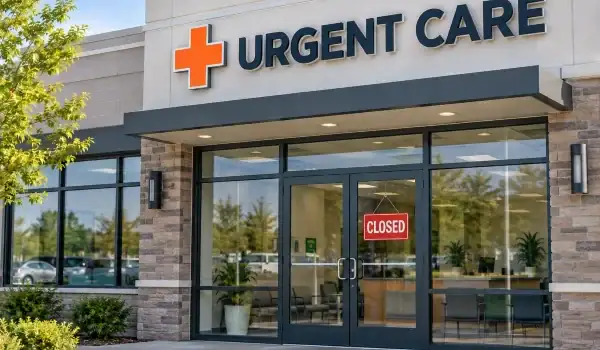
Is Your Urgent Care Ready for the 2026 ADA Mandate?

Is Your Urgent Care Ready for the 2026 ADA Mandate?

Urgent Message: Urgent care facilities must ensure their medical diagnostic equipment and staff training protocols meet new ADA accessibility standards by the July 8, 2026, deadline. Key Words: Americans with Disabilities Act; Medical Diagnostic Equipment; Accessible Exam Tables; Staff Training; Urgent Care Compliance Alan A. Ayers, MBA, MAcc Ensuring equal access to healthcare services isn’t just a goal, it’s a legal mandate. The Americans with Disabilities Act (ADA)1 assures everyone has equal access to healthcare …

Read More
Raising the Bar: Why Accreditation Matters in Urgent Care

Raising the Bar: Why Accreditation Matters in Urgent Care

Lisa H. Bishop It’s a familiar story. A friend was recently on vacation and visited a small, rural “urgent care” with a 2-day history of nasal congestion and a scratchy throat—no fever, no sinus tenderness, and a reassuring exam. She left with 4 prescriptions: a Z-Pak, a Medrol Dose Pack, a narcotic cough syrup, and Diflucan, “just in case the antibiotic causes yeast.” She reached out to me, concerned that she received 4 prescriptions for …

Read More
Commercial Reimbursement In Urgent Care

Commercial Reimbursement In Urgent Care

While examining 17,410,492 commercially insured visits in the Experity EMR from November 1, 2024, through October 31, 2025, we calculated zero-balance net revenue per visit (NRV) for urgent care by state. NRV represents total payments from both patients and insurers when the claim is closed, and it includes evaluation/management and ancillary codes. Data include commercial plans and third‑party managed Medicaid and Medicare but exclude self-pay, workers’ compensation, employer-paid services, motor vehicle accidents, and traditional Medicare …

Read More
Leveraging Physician-Patient Relationships to Increase Patient Portal Access During an Urgent Care Visit

Leveraging Physician-Patient Relationships to Increase Patient Portal Access During an Urgent Care Visit

Urgent Message: Urgent care physicians can leverage the physician-patient relationship established during a visit to improve patient portal enrollment and use in a healthcare system. Sandy Wang, MD, MPH; Carolyn Stern, MD; Kevin Fiscella, MD, MPH; Amaya Sanders, BS; Erik Herbert, BS; Rosie Booker, BS; Tyra Barton, LPN; Mechelle Sanders, PhD Key Words: Electronic Health Records, Patient Portals, Urgent Care, Quality Improvement Abstract Background: Patient portals for accessing electronic health records are useful for easy …

Read More
Benefits of Adding Primary Care Services to Your Urgent Care

Benefits of Adding Primary Care Services to Your Urgent Care

Phyllis Dobberstein, CPC, CPMA, CPCO, CEMC, CCC In the last few years, the Centers for Medicare & Medicaid Services (CMS) has accelerated its long-term effort to strengthen primary care as the foundation of the U.S. health system. Through new payment models, regulatory changes, and equity-driven initiatives, CMS aims to rebalance healthcare spending toward prevention, care coordination, and whole-person health. All these are areas historically underfunded compared to specialty or hospital care. Major policy changes have …

Read More
More Than Half of Hospitals Embrace Generative AI

More Than Half of Hospitals Embrace Generative AI

A national survey of 2,174 U.S. acute care hospitals found growing uptake of generative artificial intelligence (AI) tools integrated with electronic health records (EHRs) in 2024, as published in JAMA Network Open. A total of 762 hospitals (31.5%) were considered “early adopters,” meaning they currently use integrated, generative AI. Another 24.7% say they plan to have implementation within a year (“fast followers”), suggesting that more than half of the hospitals surveyed would have adoption by …

Read More
A United Vision for 2026: Strengthening Our Voice, Our Value, and Our Future

A United Vision for 2026: Strengthening Our Voice, Our Value, and Our Future

As we begin a new year, I’m struck by both the resilience of the Urgent Care community and the urgency of the moment we’re in. Over the past several months, through conversations with operators, clinicians, vendors, and other partners, one message has been unmistakably clear: Urgent Care is ready to move forward together with renewed purpose, a stronger voice, and a sharper vision for the future. 2026 will be a pivotal year. The pressures facing …

Read More
Cancer Society Outlines Its Insight on HPV Self-Collection 

Cancer Society Outlines Its Insight on HPV Self-Collection 

The American Cancer Society has endorsed the use of self-collected vaginal samples for cervical cancer screening in average-risk women, which experts say will improve access to testing and early detection. The new guidance published in CA: A Cancer Journal for Clinicians introduces 2 major updates, allowing for self-collection for primary human papillomavirus (HPV) testing and also clarifying the related screening cadence. Clinician-collected cervical samples have long been the standard for cytology-based screening, but research has …

Read More
More Future Doctors Enrolling In Medical School

More Future Doctors Enrolling In Medical School

Medical school enrollment is hitting a new high for the 2025-2026 academic year, according to the Association of American Medical Colleges. For the first time, total enrollment has topped 100,000 students, and the total number of medical school applicants rose by 5.3%, reversing a 3-year decline. Except for a 1-year increase in 2021-2022 during the COVID-19 pandemic, the new figures represent the largest gain in a decade, the association says. First-time applicants comprised 76.5% of …

Read More
Cardiovascular Complications Follow RSV Infection 

Cardiovascular Complications Follow RSV Infection 

A Danish study published in JAMA Network Open found that respiratory syncytial virus (RSV) infection was linked to a sustained rise in cardiovascular risk over 1 year in adults aged 45 years or older. In the study population, those with RSV (8,747 individuals) experienced 665 cardiovascular events vs 257 in matched controls (8,747 individuals without infection), yielding a 365-day excess risk of 4.69 percentage points. In this matched cohort study of 17,494 adults, early risk …

Read More
Log In