
Published on
Download the article PDF: Clinical Image Challenges October 2026
Differential Diagnosis
- Contusion
- Metacarpophalangeal dislocation
- Fifth metacarpal neck fracture
- Intra-articular fifth metacarpal head fracture
Diagnosis
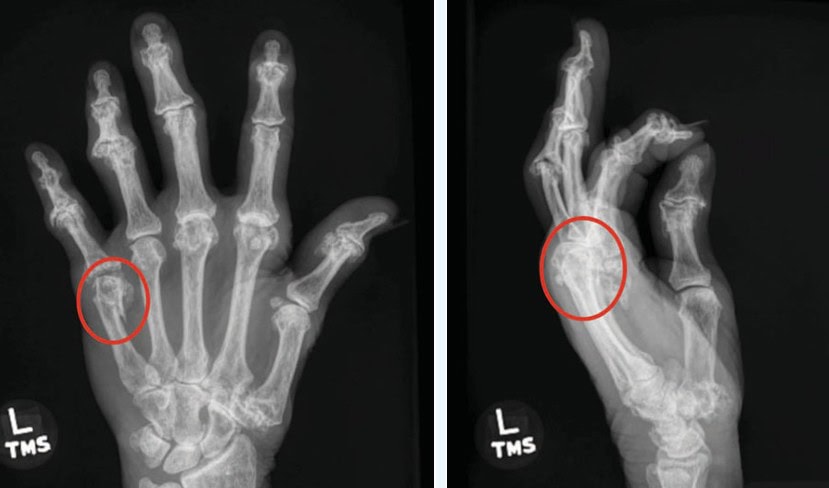
Plain radiographs show an acute, mildly displaced 5th metacarpal neck fracture. Soft tissue swelling, severe osteoarthritis, and mild osteoporosis are also noted in the images. Fifth metacarpal neck fractures, commonly known as boxer’s fractures, are among the most common hand injuries, accounting for 30% to 40% of all hand fractures. Fractures to the neck of the metacarpal are usually due to direct trauma to a clenched fist or direct blunt force trauma to the dorsum of the hand, often seen in falls among older populations. They most often involve the fifth and occasionally the fourth metacarpal neck.
What To Look For
- Thorough examination of the hand for signs of fracture angulation and rotational malalignment, impaired extensor function of the fingers, neurovascular compromise and loss of skin integrity should be performed.
- Plain radiographs including 3 views of the hand (anteroposterior, lateral, and oblique) adequately display metacarpal neck fractures; measurements of angulation should be performed on the lateral view.
- Ultrasound may also be used in evaluating fractures in the metacarpal bones; evidence suggests high sensitivity and specificity in diagnosing metacarpal fractures.
Pearls for Urgent Care Management
- Acute fracture reduction is indicated if there is hyperextension at the MCP joint and flexion at the proximal interphalangeal (PIP) joint with attempted extension of the finger. Reduction is also needed for significantly angulated 4th or 5th metacarpal fractures. If performed in the urgent care setting, post-reduction immobilization and repeat radiographs are recommended to ensure adequate reduction and alignment.
- An ulnar gutter splint may be used to immobilize fractures of the 4th and 5th metacarpal necks; however, growing evidence supports more minimalist interventions for uncomplicated 5th metacarpal neck fractures. Off-the-shelf Galveston splints allow for use of fingers while maintaining fracture position, which may be beneficial for older patients, and buddy taping and soft wrapping may also be appropriate.
- Complex metacarpal neck fractures that are severely comminuted, angulated > 30 degrees or have any rotational malalignment should be referred to a hand surgeon.
- Return to work should be expected when the patient’s metacarpal joint is pain-free, non-tender, and has functional range of motion. Return to contact sports or heavy labor prior to 6 weeks post fracture requires orthotic protection.
68-Year-Old Female With Swollen, Painful Hand
1 2