
Published on
Download the article PDF: Clinical Image Challenges May 2026
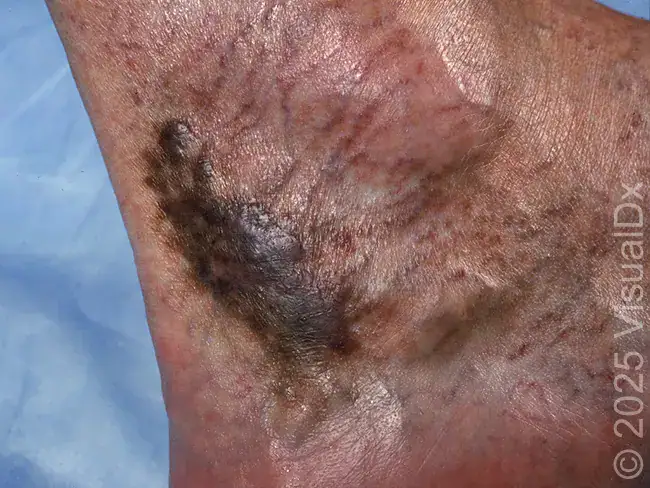
Differential Diagnosis
- Cutaneous T-cell lymphoma
- Acroangiodermatitis
- Stasis dermatitis
- Kaposi sarcoma
- Pigmented purpuric dermatoses
- Lichen simplex chronicus
Diagnosis
The patient’s diagnosis is acroangiodermatitis (AAD), also known as pseudo-Kaposi sarcoma. AAD is a benign, rare, vasoproliferative skin disorder that occurs on the lower limbs due to chronic venous hypertension and hypostasis, most often in the setting of chronic venous insufficiency or stasis dermatitis. The condition is visually similar to Kaposi sarcoma but is distinguished histologically and by its association with chronic venous disease.
What To Look For
- History of venous insufficiency: AAD is a complication of venous insufficiency and stasis dermatitis; it should be considered in patients with chronic venous disease who develop purpuric plaques.
- Lesions to legs and feet: purpuric macules and papules that may coalesce into large, purple-brown plaques on the extensor surfaces of the legs and dorsa of the feet.
Pearls for Urgent Care Management
- Address underlying causes: The mainstay of management is to address the underlying venous hypertension and chronic venous insufficiency.
- Compression therapy: Compression bandaging systems or compression stockings are the primary conservative treatment for stasis dermatitis and its complications, including AAD.
- Lifestyle modifications: Encourage exercise, frequent walks, leg elevation, avoidance of prolonged standing to decrease venous hypertension and reduce edema.
- Skin care: Gentle cleansing with mild, fragrance-free cleansers, and frequent use of bland emollients to limit dryness and itching.
- Referral: If stasis dermatitis and its complications (including AAD) do not improve with supportive care, referral to a vascular specialist is indicated for further evaluation and treatment.
Acknowledgment: Image and case presented by VisualDx (www.VisualDx.com/jucm).
67-Year-Old Man With Dark Patch on Ankle
1 2