
Published on
Download the article PDF: Clinical Image Challenges October 2026
Differential Diagnosis
- Lichen planus
- Nummular dermatitis
- Prurigo nodularis
- Pemphigoid nodularis
- Seborrheic dermatitis
- Nodular scabies
- Hypertrophic lichen planus
- Epidermolysis bullosa pruriginosa
Diagnosis
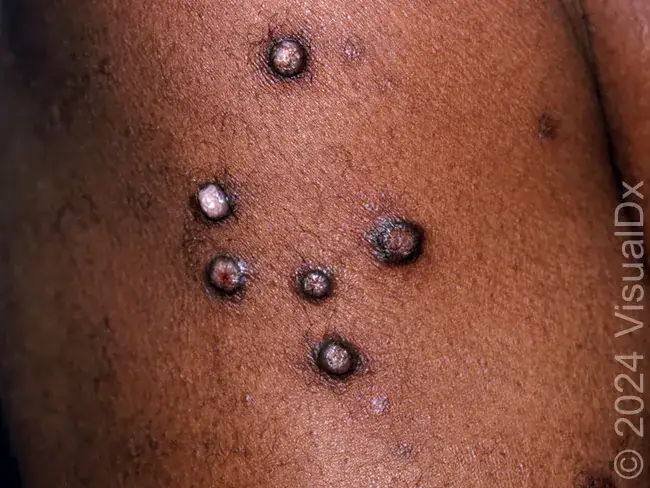
The correct diagnosis is prurigo nodularis (PN). PN is an uncommon, chronic skin disorder affecting primarily older adults. PN is characterized by symmetrically distributed, multiple, firm, pruritic nodules, typically localized to the extensor surface of extremities and trunk. PN is frequently associated with a history of atopic dermatitis and seems to be more common among African Americans than in other ethnic groups. Systemic diseases and psychiatric disorders have also been reported with high frequency in patients with PN.
The diagnosis of PN is clinical. The diagnosis is based upon a history of chronic, severe pruritus and the clinical finding of the characteristic excoriated, nodular lesions which are often symmetrically distributed. A skin biopsy is not routinely required to confirm the diagnosis. PN is a chronic and often intractable disease that may last for years, with a profound impact on the patient’s quality of life. Complete resolution of lesions is rare, even after the itch-scratch cycle has been successfully interrupted. Recurrence is common.
What To Look For
- Exam reveals firm, dome-shaped, itchy nodules ranging in size from a few millimeters to several centimeters. The nodules can be flesh-colored, erythematous, or brown/black and range in number from a few to hundreds.
- The extensor surfaces of the extremities are characteristically involved, but the upper back, abdomen, and sacrum may also be involved. The palms, soles, face, and flexural areas are rarely involved.
- Pruritus is always severe and distressing. It can be paroxysmal, sporadic, or continuous and is worsened by heat, sweating, or irritation from clothing.
Pearls for Urgent Care Management
- Symptomatic treatment of pruritus: recommend mild cleansers for bathing or showering and applying emollients multiple times per day; may try lotions that provide a cooling sensation on the skin, such as calamine lotion or lotions containing menthol and camphor. Keep nails short and recommend wearing gloves at night.
- Topical and intralesional corticosteroids: superpotent topical corticosteroids as first-line therapy–clobetasol dipropionate 0.05% ointment applied under occlusion with plastic wrap once at nighttime for at least 2 to 4 weeks. Topical corticosteroids can be tapered to once or twice weekly and continued as a long-term maintenance regimen.
- Treat the itch: first-generation antihistamines such as hydroxyzine or diphenhydramine administered at bedtime may help control nocturnal pruritus. Other topical treatments could be considered including capsaicin, calcineurin inhibitors or topical vitamin D analogues.
- Widespread or recalcitrant disease: Refer to primary care and/or dermatology as they may benefit from ultraviolet phototherapy, intralesional injection of corticosteroids, or tricyclic antidepressants to control pruritus.