Most Physicians Look At Data From Patient Wearables: AMA Survey

Most Physicians Look At Data From Patient Wearables: AMA Survey

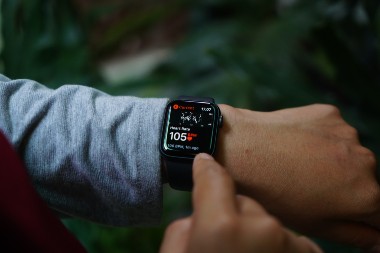
An American Medical Association (AMA) survey of 2,222 physicians across 6 countries found strong physician interest in using data collected from consumer wearables, such as smartwatches or over-the-counter biosensors. However, widespread use of the wearable data in clinical practice is limited, according to AMA. Among U.S. physicians, 86% report reviewing at least 1 type of wearable data, most commonly activity and function (67%), heart physiology (62%), events and alerts (55%), sleep (54%), and glucose or …

Read More

Smartwatches Are Trustworthy AFib Screening Devices

Smartwatches Are Trustworthy AFib Screening Devices

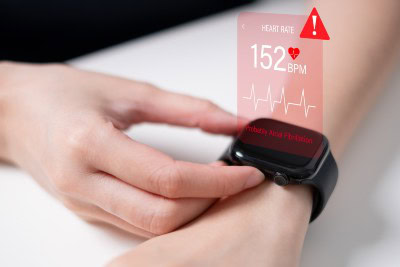
Smartwatches do a good job of identifying atrial fibrillation, according to a meta-analysis in JACC. The authors considered data from 26 studies that included 17,349 participants and found that smartwatches detect atrial fibrillation with high accuracy. Overall sensitivity was 94.8%, and specificity was 96.4%. The accuracy of the results varied when comparing each individual device, however. According to the authors, Amazfit (99% sensitivity; 99% specificity) and Samsung (97% sensitivity; 96% specificity) models performed at the …

Read More
Smartwatches Show Promise in Detecting Arrhythmia in Kids

Smartwatches Show Promise in Detecting Arrhythmia in Kids

According to a retrospective study, smartwatches can detect arrhythmia events in children, including events that are not generally captured with ambulatory monitors. The study presented in Communications Medicine examined medical records for 145 patients under 18 years old and documented potential arrhythmias that were identified by an Apple Watch. Recordings were captured when the patients believed that their heart rhythm was abnormal. Scott Ceresnak, MD, director, of the Pediatric Electrophysiology Program, Stanford Medicine Children’s Health, …

Read More
Log In