Multiple Telehealth Options Better Serve Patient Populations

Multiple Telehealth Options Better Serve Patient Populations

A new Lancet Digital Health viewpoint article argues that virtual urgent care should not be limited to a single service model because different approaches influence access, equity, cost, and operations. The authors describe 4 common health system models—telemedicine conversion, on-demand visits, scheduled virtual visits, and asynchronous store-and-forward care—and emphasize that each type addresses different patient needs. The authors note that 94% of urgent care centers offered telehealth by 2022, up from 29% in 2019—largely driven …

Read More


Surprisingly, Portal Messaging Doesn’t Reduce In-Person Visits

Surprisingly, Portal Messaging Doesn’t Reduce In-Person Visits

A large-scale analysis of electronic health record data from more than 2,000 hospitals and 47,000 clinics found that secure patient portal messaging has become a component of outpatient care rather than a replacement for office visits, as published in JAMA. Investigators analyzed communication trends among active patients from 2020–2025 using nearly 8 billion office visits, portal messages, telephone encounters, and telehealth visits. Portal messages coming in from patients rose from 0.99 to 2.50 messages per …

Read More
States Adopt Varied AI Scribe Laws

States Adopt Varied AI Scribe Laws

Rhode Island recently became the first state with a law specifically aimed at ambient AI scribes, requiring disclosure to patients when scribes are used and provision of an opt-out process. State law also says the provider must review any AI-generated documentation for accuracy. Only a small number of states have enacted laws that specifically require healthcare providers to disclose the use of ambient AI tools during patient encounters. A few others rely on broader AI …

Read More
Physician Use of AI Increases As Confidence Grows

Physician Use of AI Increases As Confidence Grows

A new survey from the American Medical Association’s (AMA) Center for Digital Health and AI found that physician use of AI has increased substantially, with 81% reporting use in practice now compared with 38% in 2023. The average number of use cases per physician also rose from 1.1 to 2.3. Physicians say they most commonly use AI for research summarization and clinical documentation. Confidence in AI is increasing too, with more than 75% of surveyed …

Read More
New Copilot Health AI Tool Promises Connections To Health Records, Wearables

New Copilot Health AI Tool Promises Connections To Health Records, Wearables

Not to be outdone by the other household names in consumer technology, Microsoft has now launched Copilot Health, its AI health chatbot within Copilot that knits together health records, health history, and device data from more than 50 wearables, according to a press release. Microsoft says the Copilot platform already responds to some 50 million consumer health questions each day. Through the company’s recently integrated partner platform for sharing health records, HealthEx, the AI tool …

Read More
New Amazon AI Tools Sum Up Information, Handle Scheduling

New Amazon AI Tools Sum Up Information, Handle Scheduling

Amazon Web Services has introduced Amazon Connect Health, a collection of artificial intelligence tools, including features that help clinicians sort out clinical information from patient histories. Amazon reasons that clinicians and staff spend too much time cobbling together information, and the new agentic AI tools can take on that task instead. Already in service at UC San Diego, the AI suite is verifying patients’ identities; handling appointment scheduling in real time; creating summaries of medical …

Read More
Dedicated EHR Time Reduces After-Hours Work For Clinicians

Dedicated EHR Time Reduces After-Hours Work For Clinicians

A study of general internal medicine physicians from 2 ambulatory practice networks evaluated whether reserving protected time for EHR tasks—such as messaging, prior authorizations, or medication refills—affects physician productivity and hands-on EHR time. Researchers compared 130 general internal medicine physicians (41 in the intervention group and 89 in the control group) from November 2021 to June 2024 and set aside 1 appointment slot per half-day (20-30 minutes) dedicated to asynchronous EHR tasks. As published in …

Read More
More Than Half of Hospitals Embrace Generative AI

More Than Half of Hospitals Embrace Generative AI

A national survey of 2,174 U.S. acute care hospitals found growing uptake of generative artificial intelligence (AI) tools integrated with electronic health records (EHRs) in 2024, as published in JAMA Network Open. A total of 762 hospitals (31.5%) were considered “early adopters,” meaning they currently use integrated, generative AI. Another 24.7% say they plan to have implementation within a year (“fast followers”), suggesting that more than half of the hospitals surveyed would have adoption by …

Read More
Smartwatches Are Trustworthy AFib Screening Devices

Smartwatches Are Trustworthy AFib Screening Devices

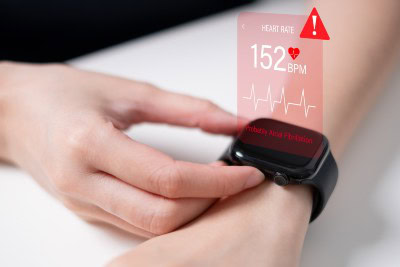
Smartwatches do a good job of identifying atrial fibrillation, according to a meta-analysis in JACC. The authors considered data from 26 studies that included 17,349 participants and found that smartwatches detect atrial fibrillation with high accuracy. Overall sensitivity was 94.8%, and specificity was 96.4%. The accuracy of the results varied when comparing each individual device, however. According to the authors, Amazfit (99% sensitivity; 99% specificity) and Samsung (97% sensitivity; 96% specificity) models performed at the …

Read More
LLMs Save Time For ED Discharge Notes

LLMs Save Time For ED Discharge Notes

When using a large language model (LLM) assistant for generating emergency department (ED) discharge notes at an academic 2,400-bed tertiary hospital in South Korea, physicians gained some worthwhile efficiencies, according to a comparative effectiveness study published in JAMA Network Open. Six emergency physicians created 300 manual notes, 300 LLM drafts, and 300 LLM-assisted notes from 50 patient cases, which were judged on a Likert scale ranging from 1 to 5. Compared with manual documentation, LLM-assisted …

Read More
Log In