Contrary to the fear that virtual care cannibalizes brick-and-mortar volume, 2025 data reveals a distinct “halo effect” for hybrid urgent care operators.
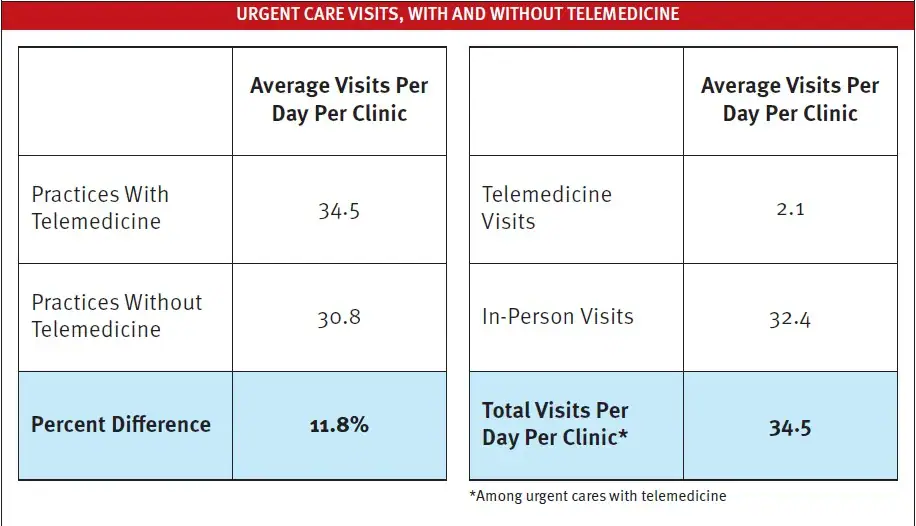
Analysis of average daily visits shows that practices offering telemedicine outperformed those that did not by nearly 12%, averaging 34.5 visits per day compared to 30.8.
Crucially, this growth is not purely digital. While hybrid clinics averaged 2.1 telemedicine cases daily, they also saw 32.4 in-person visits—approximately 2 more physical encounters per day than non-telemedicine clinics. This lift was most
pronounced during off-season months, suggesting digital access acts as a stabilizer against seasonal volatility.
Telemedicine is no longer a replacement product; it is the modern urgent care’s most critical retention tool. The data confirms that a robust digital front door doesn’t just capture virtual revenue—it actively drives patients into the physical center who might otherwise drift to competitors.
Methodology: Analysis of ~35,987,000 patient encounters in Experity EMR in 2025 across 3,760 locations, 7.5% of which regularly bill telemedicine services. To ensure a representative comparison of clinical presentations, the dataset excludes telemedicine services for behavioral health.
The ‘Halo Effect’ of Hybrid Care
Alan A. Ayers, MBA, MAcc
President of Experity Consulting and is Practice Management Editor of The Journal of Urgent Care Medicine