When Bell Palsy Is Actually a Stroke: A Case Report

When Bell Palsy Is Actually a Stroke: A Case Report

Urgent Message: While Bell palsy is the most common diagnosis for patients with unilateral facial weakness/paralysis, it is important for urgent care clinicians to be able to quickly differentiate it from other more serious diagnoses. Keywords: facial palsy; stroke mimic; Bell palsy; central facial weakness; peripheral facial palsy; urgent care evaluation Luke Wisniewski, OMS3; Finley Kocher, OMS3; Muhammad Akhtar, MD Abstract Introduction: Bell palsy is the most common diagnosis for patients with unilateral facial weakness/paralysis …

Read More
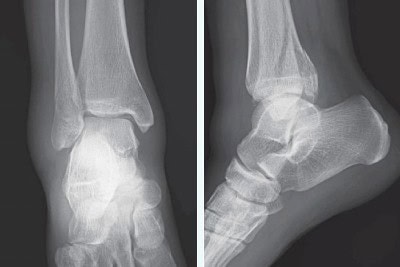
Progressive Ankle Pain in a 12-Year-Old Male: A Case Report of Osteomyelitis

Progressive Ankle Pain in a 12-Year-Old Male: A Case Report of Osteomyelitis

Urgent Message: While most pediatric musculoskeletal complaints are usually benign and self-limited, the urgent care clinician must consider more serious underlying causes of pain in the differential diagnosis. Keywords: pediatric osteomyelitis; atraumatic ankle pain; limping child; bone infection; ESR; CRP; MRI diagnosis Erin Loo, PA-C, MHA, FCUCM Abstract Introduction: Pediatric patients commonly present to urgent care (UC) with musculoskeletal complaints. However, a wide differential should be considered, including musculoskeletal injury, synovitis, autoimmune conditions, cellulitis, avascular …

Read More
The Impact of Parental Pressure on Providers Practicing in Pediatric Urgent Care

The Impact of Parental Pressure on Providers Practicing in Pediatric Urgent Care

Urgent Message: Pediatric urgent care providers commonly experience pressure to satisfy parental expectations, which may alter clinical decision making, increase stress levels, and/or impart barriers to administering quality care. Keywords: parental pressure; antibiotic prescribing; shared decision-making; pediatric urgent care; patient satisfaction; clinical decision-making Daniel Moscato, MS, PA-C; Sara Winter, MS, PA-C Abstract Background: Patient-centered care focuses on strengthening patient participation in their own healthcare. Although advantages to such care exist, intended shared decision making between …

Read More
Algorithmic Prediction of Utilization and Financial Viability Modeling for Point-of-Care Ultrasound (POCUS) in Adult Urgent Care Patients

Algorithmic Prediction of Utilization and Financial Viability Modeling for Point-of-Care Ultrasound (POCUS) in Adult Urgent Care Patients

Urgent Message: The prediction model developed for this study suggests that point-of-care ultrasound implementation could have both clinical utility and fiscal viability in an average urgent care center. Future work should validate the prediction model in a real-world urgent care setting. Key Words: point-of-care ultrasound; POCUS utilization; urgent care ultrasound; return on investment; financial modeling; implementation planning John Weissert; Joshua Russell, MD, MSc, ELS, FCUCM, FACEP; Tatiana Havryliuk, MD Abstract Introduction: Point-of-care ultrasound (POCUS) use …

Read More
Stop Waiting For ‘AI-Native’ Clinicians, Invest in Upskilling Now

Stop Waiting For ‘AI-Native’ Clinicians, Invest in Upskilling Now

Urgent Message: Invest in artificial intelligence upskilling across your organization by dedicating resource time and funding for educational activities. It’s a critical strategy for urgent care operators to improve staff retention and operational readiness. Keywords: clinician upskilling; AI literacy; workflow adoption; clinical documentation; decision support; change management Burnout remains a serious consideration across healthcare, and urgent care is no exception. At the same time, artificial intelligence (AI) is reshaping how we deliver and manage care. …

Read More
The Listening Revolution: Change Management Considerations with Ambient AI

The Listening Revolution: Change Management Considerations with Ambient AI

Urgent Message: The ultimate goal of ambient AI is to reclaim time for patient care by offloading burdensome administrative processes. Building trust is the first of several success factors in this revolution. Keywords: ambient AI; medical scribe; clinical documentation; EHR workflow; implementation barriers; change management Alan A. Ayers, MBA, MAcc Urgent care providers face immense demands: high patient volumes, tight schedules, and the ongoing expectation to deliver exceptional care. Yet amid these pressures, documentation continues …

Read More
Missed Opportunities in STI Test Bundling

Missed Opportunities in STI Test Bundling

An analysis of 70,915,524 visits logged across ~3,600 urgent care centers in the Experity EMR from January 1, 2024, through November 22, 2025, reveals a critical disconnect between testing realities and Centers for Disease Control and Prevention guidelines advising concurrent screening for HIV and syphilis when testing for chlamydia and gonorrhea (CT/NG). The most glaring omission is syphilis. As the table illustrates, fewer than 45% of patients tested for CT/NG who used health insurance—which paid …

Read More
Mitigating Coding Compliance Risks of AI Documentation Tools

Mitigating Coding Compliance Risks of AI Documentation Tools

Three types of artificial intelligence (AI) technologies are quickly moving to the urgent care exam room: real-time transcription; real-time coding; and clinical decision support systems.[1] They promise to reduce clinician burden per visit, improve documentation in the medical record, reduce cost per episode of care, and improve reimbursement. They may create challenges related to clinical ownership, medical decision making, and compliance, however.[2] Notes and code suggestions generated by AI for urgent care patients are likely …

Read More
61-Year-Old With Chronic Kidney Disease

61-Year-Old With Chronic Kidney Disease

A 61-year-old male with a history of hypertension, diabetes, and chronic kidney disease presents to urgent care on a Tuesday afternoon with 1 week of increased weakness. He says he’s “feeling off balance.” He denies chest pain, shortness of breath, or recent illness. An ECG is ordered. View the ECG and consider what your diagnosis and next steps would be. Resolution of the case is described on the next page.

Read More
Physician, Heal Thyself

Physician, Heal Thyself

Hal P. Kramer, MD After 41 years of clinical medicine, 2025 became my “physician, heal thyself” year. I became a patient with a story. Without challenge or feedback, many of us continue to repeat the same physical exams for a variety of complaints. We all develop our tools of the trade. However, we must remember that medicine is never all-known. Old ways can lead to new ways with a questioning and inquisitive mind. How many …

Read More
Log In