Improving Patient–Provider Communication Can Also Improve Antibiotic Stewardship

Improving Patient–Provider Communication Can Also Improve Antibiotic Stewardship

It’s a nearly constant battle: Patients insist on a prescription for an antibiotic even though it’s not indicated, putting prescribers in the unenviable position of either complying with an unreasonable and possibly dangerous demand or doing the right thing and incurring the unsatisfied patient’s wrath (possibly including poor ratings and complaints online). A new post on PatientEngagementHIT suggests that focusing on better communication between provider and patient could go a long way toward resolving such …

Read More
Tis the Season—for More Trips to Urgent Care and the ED

Tis the Season—for More Trips to Urgent Care and the ED

Constant distractions, overindulging in alcohol, the potential for slick driving conditions, and other seasonal risks add up to greater likelihood of injury and illness at this time of year—making for an estimated increase of 10% to 15% in trips to urgent care centers and emergency rooms, according to the Consumer Product Safety Commission. Holiday decorating alone accounts for roughly 15,000 trips to the ED. Further, many people spend the holidays far from home—and far away …

Read More
Watch for Red Flags That Your Top People Could Be Eying the Exit

Watch for Red Flags That Your Top People Could Be Eying the Exit

There are usually signs when a valued employee is thinking of jumping ship—but that’s not much help if you don’t know to look for the signs. A new post on Advisory Board recommends running through a “red flag checklist” to see if you’re in danger of losing your MVP. Such a checklist would include looking for sudden changes in performance, attendance, the level of interest an employee has in their role, a change in the …

Read More
Don’t Forget the Human Touch (Literally)

Don’t Forget the Human Touch (Literally)

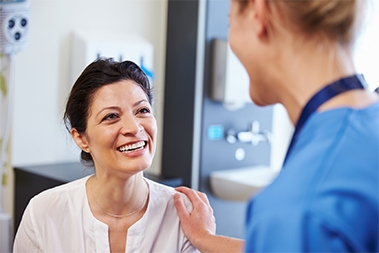
Providers have very little time with patients (many of whom they’ve never met before, in the case of urgent care), so it can be easy to disregard the importance of the human touch in the service of “efficiency.” Doing so could be a mistake both clinically and in terms of patient satisfaction, however. A recent article in The New York Times recounts the experience of a woman who was comforted throughout a breast cancer scare …

Read More
Better Transportation Options Could Bring More Patients to Your Front Door

Better Transportation Options Could Bring More Patients to Your Front Door

Ride-sharing pioneer Uber is putting more resources into serving as a healthcare transport provider, recognizing that traditional taxi companies tend to put little effort into picking up patients who they fear could be high maintenance and low tippers. According to a new post on the website Advisory Board, Uber just hired a pair of experts to help them beef up their efforts in this area—one a healthcare consultant and the other a veteran of competitor …

Read More
It Turns Out Telemedicine May Be More Appealing to City Folk

It Turns Out Telemedicine May Be More Appealing to City Folk

Advances in telehealth have often been presumed to provide greater access to healthcare for patients in rural communities that may be underserved by healthcare providers. However, a new report from the U.S. Department of Agriculture indicates that virtual healthcare visits are actually more popular with residents of urban areas. USDA researchers looked at data from 50,000 households that were home to more than 130,000 individuals who participated in the U.S. Census Bureau’s 2015 Current Population …

Read More
Thanksgiving: A Day of Gratitude—and Carelessness that Sends Many to Urgent Care and the ED

Thanksgiving: A Day of Gratitude—and Carelessness that Sends Many to Urgent Care and the ED

Thanksgiving is one of the busiest days of the year for urgent care centers that are open, at least at the New York metropolitan area’s CityMD locations. Whether it’s people trying to show off with a carving flair that exceeds their skill level (cutting more than the turkey in the process), scarfing down an undercooked bird, or getting splattered with oil from a fryer, many end the day worse off than they were in the …

Read More
Is Urgent Care Doing Enough—Are You Doing Enough—to Slow the Spread of STDs?

Is Urgent Care Doing Enough—Are You Doing Enough—to Slow the Spread of STDs?

Treatment and prevention of sexually transmitted diseases may be the particular expertise of clinicians who staff sexual health clinics—but that doesn’t mean those responsibilities are their exclusive domain. Primary care and urgent care will need to step up their game if the current upswing in many STDs is to be turned around, as noted in a recent article from Kaiser Health News. Screening and treatment are both well within the expertise of urgent care providers. …

Read More
More Data Show Millennials Prefer Walk-In Settings Like Urgent Care

More Data Show Millennials Prefer Walk-In Settings Like Urgent Care

The largest generational segment in the United States today—the 83 million “Millennials” born between 1981 and 1996—are demonstrating a preference for the convenience of walk-in care facilities compared with an ongoing relationship with a traditional primary care office-based physician, according to new data released by the Kaiser Family Foundation. It’s not just the convenience, though; speed of service, price transparency, and connectivity were also mentioned as key attributes that appealed to them. Of all the …

Read More
Hospitals Prove Dangerous for Too Many Physicians

Hospitals Prove Dangerous for Too Many Physicians

Nearly half of the 3,500-plus emergency physicians who took part in a survey commissioned by the  American College of Emergency Physicians (ACEP) say they’ve been physically assaulted at work. Most deny being injured or needing to take time off as a result. Hitting/slapping, spitting, punching, kicking, scratching, and biting were all considered to be physical assault. The numbers are even worse when you consider nonphysical assaults or harassment; 96% of female physicians and 80% of …

Read More
Log In