Pregnant Women Don’t Need To Stop Inhaled Corticosteroids: Study

Pregnant Women Don’t Need To Stop Inhaled Corticosteroids: Study

Clinicians can be reassured that evidence supports recommendations (eg, Global Initiative for Asthma) that pregnant women with asthma can continue use of inhaled corticosteroids (ICSs) during pregnancy, as published in JAMA Network Open. In the study of 6,105 pregnant women in South Korea, 2,108 women (34.5%) continued ICS during the first trimester and were compared to 3,997 women (65.5%) who discontinued ICS during the first trimester. Researchers found ICS continuation was not associated with significantly …

Read More


New Migraine Guide Highlights Prevention Opportunities

New Migraine Guide Highlights Prevention Opportunities

The updated American Academy of Neurology (AAN)/American Headache Society (AHS) guidelines for pharmacologic prevention of migraine in adults were published this week in Neurology and endorsed by the American Academy of Family Physicians. The guidelines suggest a migraine visit should also be considered as an opportunity for clinicians to identify patients who need preventive therapy beyond just treatment for the acute event. According to the update, preventive treatment should be offered to adults with 4 …

Read More
Urgent Care Beats Primary Care On Speed of Service

Urgent Care Beats Primary Care On Speed of Service

A survey of 1,014 U.S. healthcare consumers suggests that speed remains urgent care’s strongest competitive advantage, and it’s also the factor consumers value most, according to data from branding firm Monigle. Urgent care outperformed primary care on consumers’ perception of “help you get care quickly” (71% vs 68%), but primary care scored better on all the other measures included in the survey. The largest gaps between urgent care and primary care appeared in the ability …

Read More
Clinicians Rewrite Vast Majority of AI-Drafted Portal Messages

Clinicians Rewrite Vast Majority of AI-Drafted Portal Messages

Researchers from Dartmouth found that when using large language models (LLMs) to draft responses to patient portal messages, clinicians may spend more time editing the AI responses than it would take to write them manually in the first place. Using more than 610,000 patient portal messages, the researchers created a training dataset of 144,000 clinician–patient conversations and tested multiple commercial and locally hosted LLMs against expert-written responses. In the study —which was presented at the …

Read More
Back Pain May Improve With Lumbar Belt Use

Back Pain May Improve With Lumbar Belt Use

Lumbar belts appear to be helpful for alleviating low back pain, possibly offering a reasonable alternative to pain medication. In an analysis published in JAMA Network Open of 168 adults with nonspecific low back pain lasting 1–6 months, researchers evaluated whether adding a nonrigid lumbar belt to usual care improved pain and function. Patients assigned to the belt were instructed to wear it 4–8 hours daily for 12 weeks. At 12 weeks, disability scores improved …

Read More
Patients Can Now Track Their Ketone Trajectory

Patients Can Now Track Their Ketone Trajectory

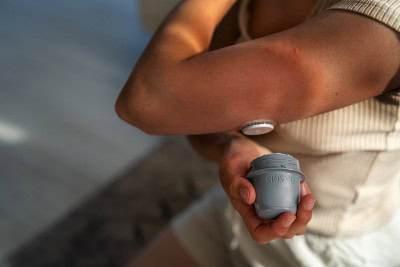
The Food and Drug Administration (FDA) has approved a continuous glucose and ketone monitoring system, which it says is the first wearable device that monitors both levels simultaneously with a single sensor. The system measures glucose and ketones in interstitial fluid every minute for up to 10 days and transmits the information to the patient’s smartphone. Patients arriving in urgent care will be able to present not just current ketone readings but the direction and …

Read More
Is It Okay For Patients To Sneak a Peek In The Portal?

Is It Okay For Patients To Sneak a Peek In The Portal?

Waiting for test results can be a nerve-wracking experience for patients, and many are accessing results in a portal before their clinician even gets a look. In a nationally representative survey of 4,982 U.S. adults, 68.6% of respondents said they viewed their test results through a patient portal before hearing from their healthcare practitioner. Among those who viewed results first, 6.6% reported poor understanding of what the results showed and what they meant for their …

Read More
Urgent Care Antibiotic Stewardship Produces Positive Results

Urgent Care Antibiotic Stewardship Produces Positive Results

Antimicrobial stewardship programs (ASPs) in urgent care settings appear to produce practice improvement, according to a new systematic review published in Cureus. Researchers evaluated literature reporting on ASPs specifically in urgent care settings and found that 11 of 12 completed studies demonstrated reduced antimicrobial prescribing or improved appropriateness in prescribing patterns among clinicians. Education and guideline-based strategies produced some of the largest improvements. For example, an intervention that used clinical pathway pocket-card algorithms to guide …

Read More
Clinicians Don’t Always Agree On Physical Exam Findings

Clinicians Don’t Always Agree On Physical Exam Findings

A prospective multicenter study that compared physical examination findings in children with community-acquired pneumonia (CAP) found that 2 clinicians examining the same patient may not always agree on whether certain physical findings are or are not present during an exam. The study, published in JAMA Network Open, included 252 patients aged 3 months–17 years with CAP evaluated at 7 pediatric emergency departments. Two clinicians independently examined each patient within 60 minutes. After the exam findings …

Read More
Blood Drawing Robot Rarely Misses. Patients Seem To Like It.

Blood Drawing Robot Rarely Misses. Patients Seem To Like It.

The Food and Drug Administration (FDA) has authorized a new robotic device that can autonomously draw blood from a patient’s arm without hands-on operator intervention. Designed for adult outpatient blood collection, the robot essentially performs the entire venipuncture. First it uses near-infrared imaging and Doppler ultrasound to identify an appropriate vein, then applies the tourniquet, disinfects the skin, inserts the needle, changes collection tubes, disposes the needle, and applies a bandage. A trial involving 1,633 …

Read More
Log In