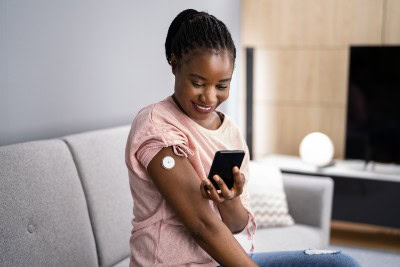
Use of Real-Time Monitors May Offer Advantages For Glycemic Control

Use of Real-Time Monitors May Offer Advantages For Glycemic Control

A study published in JAMA Network Open suggests that sustained use of real-time continuous glucose monitoring (rtCGM) may improve long-term glycemic control and reduce markers of kidney damage in high-risk adults with poorly controlled type 2 diabetes. Researchers analyzed 25,648 patients in the Kaiser Permanente Northern California system, including 2,771 who initiated rtCGM and 22,877 controls who did not use CGM. Participants had a mean baseline hemoglobin A1c (HbA1c) of 9.5%. After 1 year, rtCGM …

Read More

Some Glucose Monitor Sensors Could Be Inaccurate; What To Do

Some Glucose Monitor Sensors Could Be Inaccurate; What To Do

Recently, Abbott Diabetes Care posted an alert for a subset of its FreeStyle Libre 3 and Libre 3 Plus continuous glucose monitor (CGM) sensors. Internal testing revealed that some sensors manufactured on a single production line may provide inaccurate, low glucose readings—potentially leading patients to delay or skip necessary insulin doses. The alert affects approximately 3 million sensors in the United States; about half are estimated to have expired or already been used. Globally, Abbott …

Read More
Patients With Frequent Glucose Monitor Use See Better Results

Patients With Frequent Glucose Monitor Use See Better Results

In a study of 9,258 adults with type 2 diabetes, frequent continuous glucose monitoring (CGM) use was linked to significantly greater HbA1C reductions over 12 months compared with no CGM use, as published in JAMA Network Open. Patients using their CGM devices on 270 days per year or more achieved a mean HbA1C decrease of −1.52 percentage points (95% confidence interval [CI], −1.73 to −1.32 percentage points) vs  −0.63 percentage points in nonusers (95% CI, …

Read More
Log In