Stop Waiting For ‘AI-Native’ Clinicians, Invest in Upskilling Now

Stop Waiting For ‘AI-Native’ Clinicians, Invest in Upskilling Now

Urgent Message: Invest in artificial intelligence upskilling across your organization by dedicating resource time and funding for educational activities. It’s a critical strategy for urgent care operators to improve staff retention and operational readiness. Keywords: clinician upskilling; AI literacy; workflow adoption; clinical documentation; decision support; change management Burnout remains a serious consideration across healthcare, and urgent care is no exception. At the same time, artificial intelligence (AI) is reshaping how we deliver and manage care. …

Read More
The Listening Revolution: Change Management Considerations with Ambient AI

The Listening Revolution: Change Management Considerations with Ambient AI

Urgent Message: The ultimate goal of ambient AI is to reclaim time for patient care by offloading burdensome administrative processes. Building trust is the first of several success factors in this revolution. Keywords: ambient AI; medical scribe; clinical documentation; EHR workflow; implementation barriers; change management Alan A. Ayers, MBA, MAcc Urgent care providers face immense demands: high patient volumes, tight schedules, and the ongoing expectation to deliver exceptional care. Yet amid these pressures, documentation continues …

Read More
Missed Opportunities in STI Test Bundling

Missed Opportunities in STI Test Bundling

An analysis of 70,915,524 visits logged across ~3,600 urgent care centers in the Experity EMR from January 1, 2024, through November 22, 2025, reveals a critical disconnect between testing realities and Centers for Disease Control and Prevention guidelines advising concurrent screening for HIV and syphilis when testing for chlamydia and gonorrhea (CT/NG). The most glaring omission is syphilis. As the table illustrates, fewer than 45% of patients tested for CT/NG who used health insurance—which paid …

Read More
Mitigating Coding Compliance Risks of AI Documentation Tools

Mitigating Coding Compliance Risks of AI Documentation Tools

Three types of artificial intelligence (AI) technologies are quickly moving to the urgent care exam room: real-time transcription; real-time coding; and clinical decision support systems.[1] They promise to reduce clinician burden per visit, improve documentation in the medical record, reduce cost per episode of care, and improve reimbursement. They may create challenges related to clinical ownership, medical decision making, and compliance, however.[2] Notes and code suggestions generated by AI for urgent care patients are likely …

Read More
Physician, Heal Thyself

Physician, Heal Thyself

Hal P. Kramer, MD After 41 years of clinical medicine, 2025 became my “physician, heal thyself” year. I became a patient with a story. Without challenge or feedback, many of us continue to repeat the same physical exams for a variety of complaints. We all develop our tools of the trade. However, we must remember that medicine is never all-known. Old ways can lead to new ways with a questioning and inquisitive mind. How many …

Read More
Standing Together in Washington—and Beyond

Standing Together in Washington—and Beyond

Steve Sellars February always seems to arrive with a sense of motion. The year is no longer “new,” plans begin to take shape, and the work ahead becomes clearer. For Urgent Care, that momentum feels especially meaningful right now. During the first week of February, the Urgent Care Association (UCA) convened leaders from across the country in Washington, D.C., for our 2026 Capitol Hill Advocacy Day. It was a powerful reminder of what happens when …

Read More
Why IFU Limitations Matter in Urgent Care Lab Testing

Why IFU Limitations Matter in Urgent Care Lab Testing

Urgent Message: Urgent care teams can take practical steps to safeguard quality for Clinical Laboratory Improvement Amendments (CLIA)-waived testing by following detailed Instructions for Use information. Key Words: Clinical Laboratory Improvement Amendments; CLIA-Waived Testing; Certificate of Waiver Cathy Bohrer, MT(ASCP) Laboratory tests commonly used in urgent care are only reliable when their Instructions for Use (IFU)—including any limitations—are followed. For urgent care leaders, this isn’t just about compliance with federal regulations. Patient outcomes, safety, and …

Read More
Is Your Urgent Care Ready for the 2026 ADA Mandate?

Is Your Urgent Care Ready for the 2026 ADA Mandate?

Urgent Message: Urgent care facilities must ensure their medical diagnostic equipment and staff training protocols meet new ADA accessibility standards by the July 8, 2026, deadline. Key Words: Americans with Disabilities Act; Medical Diagnostic Equipment; Accessible Exam Tables; Staff Training; Urgent Care Compliance Alan A. Ayers, MBA, MAcc Ensuring equal access to healthcare services isn’t just a goal, it’s a legal mandate. The Americans with Disabilities Act (ADA)1 assures everyone has equal access to healthcare …

Read More
Raising the Bar: Why Accreditation Matters in Urgent Care

Raising the Bar: Why Accreditation Matters in Urgent Care

Lisa H. Bishop It’s a familiar story. A friend was recently on vacation and visited a small, rural “urgent care” with a 2-day history of nasal congestion and a scratchy throat—no fever, no sinus tenderness, and a reassuring exam. She left with 4 prescriptions: a Z-Pak, a Medrol Dose Pack, a narcotic cough syrup, and Diflucan, “just in case the antibiotic causes yeast.” She reached out to me, concerned that she received 4 prescriptions for …

Read More
Commercial Reimbursement In Urgent Care

Commercial Reimbursement In Urgent Care

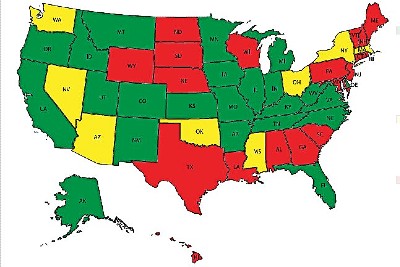
While examining 17,410,492 commercially insured visits in the Experity EMR from November 1, 2024, through October 31, 2025, we calculated zero-balance net revenue per visit (NRV) for urgent care by state. NRV represents total payments from both patients and insurers when the claim is closed, and it includes evaluation/management and ancillary codes. Data include commercial plans and third‑party managed Medicaid and Medicare but exclude self-pay, workers’ compensation, employer-paid services, motor vehicle accidents, and traditional Medicare …

Read More
Log In