Cannabis Users Might Rely on Urgent Care Less Often

Cannabis Users Might Rely on Urgent Care Less Often

In an analysis of 5,242 U.S. adults with chronic non-cancer pain, researchers found medical cannabis use was linked to fewer urgent care and emergency department (ED) visits and better self-reported health. Authors of the study, published in Pharmacy, compared the records of 3,943 patients with 1 year or more of cannabis use to 1,299 patients who had no prior exposure to cannabis, drawn from a telehealth platform designed for patients seeking to obtain medical cards …

Read More
DoxyPEP May Reduce Use of Antibiotics For STIs 

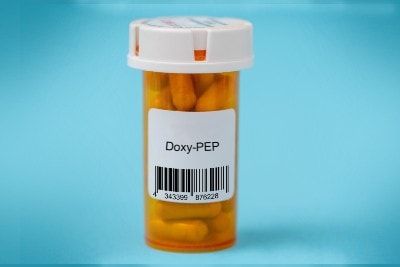
DoxyPEP May Reduce Use of Antibiotics For STIs 

A study published in the Journal of Antimicrobial Chemotherapy analyzed data from men who have sex with men who were either living with HIV or using HIV pre-exposure prophylaxis. The researchers found that using doxycycline post-exposure prophylaxis (doxyPEP) after unprotected sex significantly reduced the need for antibiotics to treat bacterial sexually transmitted infections (STIs). Between August 2022 and July 2024, 754 men in Italy were prescribed doxyPEP, and 222 (29.4%) reported using it during follow-up. …

Read More
Smart Ring With AI Model Predicts Viral Respiratory Infection 

Smart Ring With AI Model Predicts Viral Respiratory Infection 

It seems that artificial intelligence (AI) models can detect early acute systemic inflammation in response to viral respiratory tract infections (VRTIs) through biometric data collected from wearable devices, according to a small study published in Lancet Digital Health. In the prospective study, 55 healthy adults aged 18–59 years were monitored before and after receiving a live attenuated influenza vaccine, which simulated real-world infection. Participants continuously wore a smart ring, smart watch, and smart shirt, which …

Read More
Long Daytime Naps Associated With Atrial Fibrillation

Long Daytime Naps Associated With Atrial Fibrillation

A prospective cohort study of 20,827 Spanish adults found an association between daytime and nighttime sleep patterns and the risk of atrial fibrillation (AF), as published in the European Journal of Preventive Cardiology.  Over a median follow-up of 15.1 years, a total of 163 incident atrial fibrillation cases were confirmed by medical record. Compared to individuals who took short daytime naps (less than 30 minutes a day), those in the study who took long naps …

Read More
New Lyme Disease Blood Test Promises High Sensitivity, Specificity

New Lyme Disease Blood Test Promises High Sensitivity, Specificity

This week, at an annual scientific meeting of the Association for Diagnostics & Laboratory Medicine (ADLM), researchers described a blood test developed with the help of artificial intelligence (AI) that they say identifies Lyme disease sooner and more accurately than the 2-tier serology diagnostic tools currently used in medicine. The new test has sensitivity and specificity of 90% or greater, according to a press release from ADLM. Researchers created an algorithm that improved accuracy across …

Read More
Looks Like Another Tough Year for Pertussis Cases

Looks Like Another Tough Year for Pertussis Cases

This month, the Mississippi State Department of Health (MSDH) reported 80 pertussis cases for the year so far—well surpassing its total of 49 cases reported in all of 2024. Ten patients have been hospitalized, including 7 children under the age of 2, although no deaths have been recorded through July 10, 2025. Children under 18 account for 76% of Mississippi’s cases, including 7 infants younger than 2 months. At least 28 of the individuals who …

Read More
Urgent Care’s Use of Antibiotics, Glucocorticoids, Opioids Not Always Appropriate

Urgent Care’s Use of Antibiotics, Glucocorticoids, Opioids Not Always Appropriate

In a study that analyzed more than 22 million urgent care visits from 2018 to 2022, researchers assessed prescribing practices across several drug categories with the aim to shed light on opportunities for tailored stewardship programs. Among the total visits across all age groups, antibiotics were prescribed in 12.4% of visits, glucocorticoids in 9.1% of visits, and opioids in 1.3% of visits, as published in Annals of Internal Medicine. However, the authors estimate a substantial …

Read More
RSV Vaccine Shows High Effectiveness In Infants

RSV Vaccine Shows High Effectiveness In Infants

In a study of 31,900 healthy term infants at Kaiser Permanente Northern California during the 2023–2024 respiratory syncytial virus (RSV)-season, researchers found nirsevimab demonstrated high effectiveness in preventing RSV-associated lower respiratory tract disease (LRTD), as published in Pediatrics. Among immunized infants (49.1%), the incidence of RSV-associated LRTD was 6.10 per 1,000 person-years compared to 58.51 in non-immunized infants (95% confidence interval [CI], 81.7%–91.1%; P<0.001). Effectiveness against hospitalized RSV LRTD was 98.0% (95% CI, 85.1%–99.7%). Immunized …

Read More
While Some Hesitate, About 40% of Pregnant Moms and Parents Plan to Fully Vaccinate Their Kids

While Some Hesitate, About 40% of Pregnant Moms and Parents Plan to Fully Vaccinate Their Kids

In a national cross-sectional survey analyzing vaccination attitudes during pregnancy and among parents of children aged 0–5 years, researchers found a number of pregnant women and parents may be unsure when it comes to the decision to vaccinate their kids or may refuse some vaccines, as published in JAMA Network Open. In the survey sets, 35-40% of US pregnant women and parents of young children say they do intend to vaccinate their child as recommended. …

Read More
Providing Ondansetron At Home After Gastroenteritis ED Visit Helps Lower Risk For Kids

Providing Ondansetron At Home After Gastroenteritis ED Visit Helps Lower Risk For Kids

In a double-blind, randomized trial of 1,030 children aged 6 months to 18 years with acute gastroenteritis–associated vomiting, researchers found multidose ondansetron administered at home as needed after emergency department (ED) discharge significantly reduced the incidence of moderate-to-severe gastroenteritis during the subsequent 7 days. Among participants with complete follow-up, 5.1% of the ondansetron group experienced moderate-to-severe gastroenteritis (modified Vesikari score 9 or above) compared to 12.5% in the placebo group (adjusted odds ratio, 0.50; 95% …

Read More
Log In